
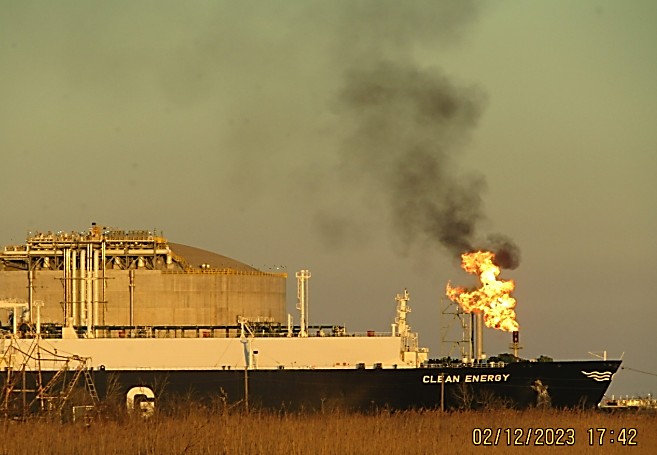
Hawaii Gaslighted by LNG?
Story originally published Dec. 10th; updated Dec. 14, 2025
When Hawaii Governor Josh Green returned from a trip to Japan in late October, he brought back a signed agreement that marks a fundamental shift in the state’s clean energy policy. The deal centers on importing liquefied natural gas (LNG) to power Hawaii’s electricity system.
The announcement caught much of the public by surprise. Although Governor Green framed the agreement as supporting Hawaii’s clean energy transition, it effectively reverses the state’s historic clean energy commitments and puts its legislated Renewable Portfolio Standard (RPS) targets for 2045 into question.
Hawaii’s Renewable Portfolio Standard (RPS) history shows a progression from an early goal to the nation’s first 100% mandate by 2045, driven by legislation in 2001, 2004, 2009, and significantly in 2015 (H.B. 623), establishing targets for 10% (2010), 15% (2015), 30% (2020), 40% (2030), 70% (2040), and finally 100% (2045) renewable energy, shifting to net generation in 2022.
The strategic partnership that Green signed with JERA Co., Inc.—Japan’s largest power producer and a major global LNG player—positions LNG as a “bridge” fuel for Hawaii’s energy transition. Under this approach, LNG would be used to generate electricity until the state’s shift to a fully clean energy economy is supposedly complete.
The LNG agreement was signed in early October but was only made public after Green returned to Hawaii later that month. The Governor’s office has promoted the deal as a way to advance the state’s energy initiatives, leaning heavily on a recent study from the Hawaii State Energy Office, which reports directly to Gov. Green. That study identifies LNG as the preferred option for replacing oil and diesel currently used in Hawaiian Electric’s power plants as their energy source of choice.
 According to the U.S. Energy Information Administration, Hawaii has the highest average electricity prices in the United States, something any HECO ratepayer can attest to, yet petroleum still fuels most of Hawaiian Electric’s power generation.
The utility’s power mix today consists of a mix of imported fossil fuels (mostly oil), with significant contributions from solar (rooftop and utility-scale), wind, one geothermal plant (when operational) and a sprinkling of biofuels, after while phasing out coal with the shut down of the Oahu AES coal-fired power plant in 2022.
Imported LNG is being presented as a potentially cheaper and cleaner alternative to today’s imported oil/diesel fuel now powering the utility’s outdated power plants. In all cases, HECO customers (aka ratepayers) foot the bill, regardless of the fuel used.
The Hawaii State Energy Office report suggests that LNG could serve as a bridge fuel for Oʻahu by replacing oil and diesel at existing power plants with what it describes as cleaner‑burning natural gas (LNG).
This official framing positions LNG as an interim step but not as a permanent long‑term energy solution for the state, but has the effect of delaying, not encouraging a full speed ahead statewide transition into clean and self-sufficient renewable energy economy, with energy locally sourced, 24×7 reliable, and certainly less expensive to ratepayers, by no longer being dependent on imported fossil fuel sources.
The state’s energy report further outlines an extensive LNG infrastructure buildout for Hawaii. Who pays? Ultimately it will be Hawaii’s ratepayers.
The state’s LNG plan envisions offshore floating platforms and floating storage and regasification units (FSRUs), along with subsea marine pipelines linking these offshore facilities to Oʻahu coupled to a dedicated port‑side LNG gas reception terminal. Together, the project’s overall economic impact represents a major long‑term investment in a natural gas infrastructure at the very moment Hawaii is supposed to be accelerating toward its 2045 clean (zero emissions) RPS energy goals.
LNG Stakeholders …
Hawaii State Energy Office; LNG cost savings report assumptions, on which Governor Green relies to support his LNG deal, are based on incomplete assumptions and only a partial accounting of potential of solar and wind energy cost off-sets, as the state report acknowledges an incomplete benefit accounting of solar-wind-battery benefits as in “some solar” cost offset assumption (apparently an incomplete afterthought in their calculations), thus weighting the report’s conclusion favoring LNG as “the” energy option of choice supporting Governor’s mission to Japan.

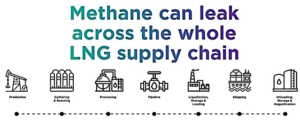
LNG is not a “clean” bridge fuel
LNG is associated with extensive lifecycle emissions, local pollution, economic volatility, and potential to delay renewable energy make it a problematic choice for long-term energy security and climate goals
LNG Environmental & Climate Impacts
- Methane Leaks:Methane (the main component of LNG) is a powerful greenhouse gas, and leaks occur during extraction, liquefaction, transport (ships), and regasification, worsening global warming.
- Life Cycle Emissions:The entire LNG process (extraction to use) results in more overall greenhouse gas emissions, potentially more than coal in some cases, say Evergreen Action and Yale E360.
- Infrastructure Footprint:Building extensive LNG infrastructure (terminals, pipelines) destroys ecosystems and creates local pollution.
LNG Health & Community Impacts
- Air Pollution:LNG facilities emit harmful pollutants like sulfur dioxide, nitrogen oxides, and particulate matter, increasing risks of respiratory illness, cancer, and heart disease for nearby, often low-income, communities (frontline communities).
- Explosion/Leak Risks:LNG facilities pose risks of fires, explosions, and hazardous leaks.
LNG Economic & Geopolitical Downsides
- Higher Consumer Costs:LNG exports can raise domestic gas and electricity prices for consumers in exporting countries,
- Energy Security Risk:Relying on LNG can lock nations into another volatile fossil fuel, creating dependency and price instability, rather than achieving true energy independence through renewables.
- Delayed Transition:Investing in LNG infrastructure slows the shift to cleaner renewable energy sources.
Hawaii’s Abundant Solar & Wind Energy to the Rescue
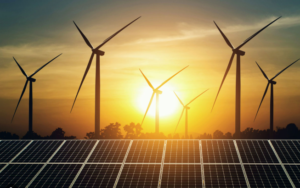 Hawaii’s abundant sunshine ensures that solar energy makes compelling case as the state’s primary clean energy resource, from rooftop systems to large-scale grid deployments, and everything in between. This is truer today than ever before. The advent of battery storage technology couple intelligent energy management software and powered by solar energy assets and large scale wind turbines is a winning energy combination made for Hawaii today, and not at some future and otherwise uncommitted date.
With the advent of battery storage connected to solar and wind generation assets, the issue of so‑called “firm” energy has largely disappeared, as these same clean energy resources now serve as intelligent, 24/7 energy management systems for both end users and utilities.
As solar became a proven and cost‑effective energy source, utility adoption of solar farms and other large‑scale projects turned these installations into essential grid management assets. Solar continues to strengthen its business case as adoption scales from single-building rooftops to large industrial solar generation sites (solar farms).
The solar landscape fundamentally changed when battery technology was added to solar systems at both residential and utility‑scale installations more than ten years ago.
This is especially true in sunny Hawaii, where there is a growing and proven business case for integrated Solar + Wind + BESS (battery) systems capable of meeting 100% or more of the state’s electricity needs. Rather than relying on LNG as a supposed magic bullet for HECO’s operational challenges, or on other costly energy distractions, Hawaii can look to these clean energy solutions to address its diverse energy needs.
Today, unlike in the recent past, deploying solar without battery storage (BESS) at any scale is analogous to a car on blocks without wheels, fully dependent on a last‑century grid connection. When solar and/or wind generation is paired with battery storage and power management systems (BESS), a wide range of clean energy options becomes possible for both system owners and the interconnected utility. In effect, solar plus battery storage and management systems are often more technologically advanced than the public power systems to which they connect, functioning as self‑sufficient microgrids on rooftops while also supporting utility grids by sharing and managing power flows from local solar generation sites to remote and interconnected grid assets.
Always Available
- Addressing Intermittency: The primary challenge with solar and wind is their intermittent nature (solar doesn’t generate at night or on cloudy days; wind generation varies with weather). This makes them “non-firm” on their own, until arrival battery power storage and management systems.
- Storage as a Bridge: BESS acts as a bridge between generation and consumption. It stores excess electricity generated during periods of high production and low demand, and releases it during peak demand or when generation is low.
- Hybrid Synergy: Combining solar and wind in a hybrid plant leverages their complementary generation profiles (wind often peaks at night/winter, solar during the day/summer). Integrating a BESS allows operators to offer a stable, predictable, and dispatchable output, essentially “firming” the variable renewable energy supply.
Capabilities of Hawaii’s combined clean (zero emissions) energy options today:
- Dispatchability: Systems that can deliver power on demand, much like traditional firm sources (e.g., natural gas or coal plants), ensuring a continuous power supply 24/7, subject only to routine maintenance.
- Grid Stability: BESS (battery technology) can instanously respond to grid needs, providing essential primary and ancillary services like frequency regulation, voltage control, and ramping support, which enhances overall grid stability.
- Resilience: The combined system can provide backup power and form microgrids, increasing 24×7 energy resilience, and replacing fossil fuel power plants design to serve as “firm energy” assets supporting the grid, offering lower operating costs to ratepayers and as measured in costly impacts to Hawaii’s unique environment.
A pivot to LNG energy will not solve Hawaii’s structural energy problems.
At all levels of the utility’s operation from end-users-to-shareholders, HECO’s priorities have repeatedly pointed towards the utility’s preservation of its obsolete combustion power plants and other capital investments often running on life support.
- Switching fuel sources into an inexhaustible supply of LNG-natural gas may represent an opportunity to rebalance the utility’s asset investments (from dirty to more dirty clean energy), but it is also not sustainable, overly costly, and a deadend energy strategy, not a bridge to the state’s RPS transition. Meanwhile, readily available sunshine and wind, could power the state’s modernization goals and coupled to proven energy storage assets operate with 24×7 power supply, and without supply issues or excessive public costs.
- The utility’s service reliability issues will not go away by just switching the utility’s fossil fuel dependencies from one fossil fuel import supplier to another. HECO remains dependent on decades old and increasingly obsolete combustion power plants, and their current business model supports the status quo, while ratepayers pay the bills of excessively high energy, climate, and environmental costs driven by the utility’s obsolete operating strategy.
- The preservation of Hawaii’s unique environment depends on clean, zero emissions energy and an affordable living standard. Hawaii’s high cost of combustion energy today plays a primary role inflating energy costs and the state’s costs of living; impacting Hawaii’s household affordability and business profitability as well placing Hawaii’s future at risk..
- For full time residents of Hawaii, the primary stakeholders in the state’s energy future, today’s energy decisions for better or worse will impact future generations of Hawaii’s residents and the state’s economy, as politicians and energy insiders decide the state’s energy future and that of it’s well-intended and legislated (RPS) transition to a clean and self-sufficient energy economy…


Leave a Reply
Join the Community discussion now - your email address will not be published, remains secure and confidential. Mahalo.