
An Economic Disruption Hawaii Cannot Escape
Predictions for the next major economic downturn are currently split between those anticipating a near-term correction and those forecasting a longer-term structural crisis.
What we can expect when the next financial crisis hits? It is hard to tell. But Hawaii’s historic economy continues to teeter back and forth between a narrowly defined two-sided economy, one which is tied to tourism and the other to real estate. Hawaii’s two sided economy is highly vulnerable to global financial disruptions, and lacking a resilient and diversified economy, the flow of investment capital into Hawaii is uneven at best.
For a variety of unfamiliar reasons, Hawaii’s traditional economic pillars, beginning with tourism dollars from Japan and Canada, are no longer reliable economic lifelines.
What’s most concerning about this approaching global moment is not the specific nature of an economic crisis, but the response and overall incompetence with which it will be handled; locally, nationally, and globally. Given the animosities that President Trump has worked so hard to kindle with America’s historic allies, traditional international and monetary cooperation is unlikely to play much of a role in any potential collective and corrective actions or economic solutions.
We stare into an unprecedented future, one in which a financial crisis like the world has never seen invites the most self-defeating government responses. Financial markets and their regulating governments may believe they have acquired some level of immunity, but the world is careening toward a moment of financial upheaval that could well dwarf the damage caused by the last economic crash.
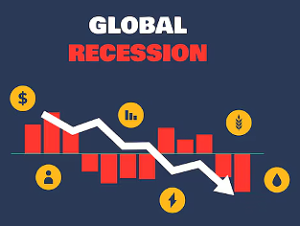 Current US politics practically guarantee that Washington’s policy response will be misguided, and steered by Donald Trump’s incontinent appetites and animosities. In the world of Trump, mistrust is the name of the game and has mostly closed down any space for collective action. A national strategy guided by policies in which America’s friends and allies are told “…my way or the highway” points to unnecessary economic damages in so far as the intergovernmental outcome shared between America and the world. As Maurice Obstfeld, former chief economist at the International Monetary Fund noted: “The political fundamentals are really bad.”
The AI Infrastructure Bubble
Key theories range from a global AI-driven “boom and bust” cycle to real estate speculation influencing long-term macroeconomic cycles. Altogether, compounded by historic economic policies ill-suited to address the realities of today’s global economic disruptions; climate impacts, petro-energy disruptions, and the breakdown of traditional global cooperation among governing institutions.
Some financial analysts argue that the intense, multi-billion-dollar infrastructure spending on artificial intelligence data centers mirrors unsustainable historical models of the past, and which generally spark a sharp economic correction if consumer and corporate willingness to pay remains low.
A bona fide financial crisis has not broken out since the US housing meltdown of 2007. America’s stock market plummeted in 2008, unemployment doubled, and soon the “contagion” of economic recession spread around the world, and all the way to Hawaii.
Since the US and the global market crash of 2008, followed by an uneven financial recovery, the world did not simply end. However, lasting wealth disparities between the haves and have nots was an economic reality of the 2008 crash. Even the Covid pandemic of 2020 and subsequent upsurge in recovery over the next four years was accompanied by inflation. However, but the Covid crash did not lead to a financial upheaval for the United States or the world, as many economists predicted.
Later, the jitters produced by the collapse of Silicon Valley Bank in 2023 were quickly forgotten as Wall Street’s economic psyche returned to business-as-usual. Given the perceived economic stability following the SVB scare of 2023, it has since taken some effort to convince financial markets that another big one (economic crash) may be just around the corner.
Leading Economic-Crash Predictors
- This 150-year-old cyclical model (Benner Cycle) is widely discussed across financial platforms like Bitget. It maps historical patterns of market “panics” and forecasts significant volatility, with cycle charts predicting high prices followed by a major “Year of Panic”.
- The ratio of total U.S. stock market value to the GDP has hit over \(221\%\), a level historically associated with market overvaluation. According to legendary investor Warren Buffett, this high suggests elevated risk for investors.
- Major Banks – J.P. Morgan and Goldman Sachs and other major banks now estimate a notable probability of a downturn. They cite inflation, potential trade wars, and sluggish non-tech economic demand as primary risks, with institutional leaders anticipating a 10% to 20% market drawdown.
Timeline
Some forecasters and financial commentators predict a market retraction or “Year of the Bear” as early as 2026-7, with deeper concerns about a severe financial meltdown by 2029 if the financial infrastructure model fails to justify the immense AI investment capital gold-rush currently sucking investors into the market’s enthusiasm for risk.


Leave a Reply
Join the Community discussion now - your email address will not be published, remains secure and confidential. Mahalo.