
Editorial: Hawaii’s Energy Present & Future
Energy; the Big Picture
Globally, oil, gas and coal benefited from $7tn in taxpayer subsidies and support in 2022 despite being the primary cause of today’s climate crisis
- Fossil fuels received benefited record global subsidies to the tune of $13,000,000 a minute in 2022, according to the International Monetary Fund.
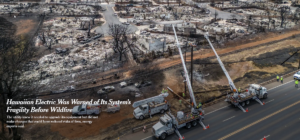
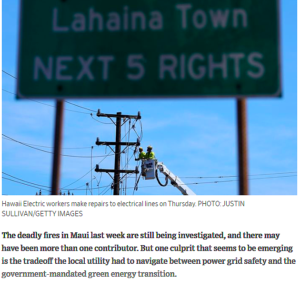
The explicit gas and oil subsidies cut the price of unsustainable fossil fuels for consumers more than doubled in 2022, as countries responded to higher energy prices resulting from Russia’s war in Ukraine. These implicit energy subsidies represent “enormous” costs to society and the environment by advancing global heating emissions. Upwards to 80% of the total climate impacts and their mitigation costs are shared by the world’s population, regardless of their location as the recent Maui fire tragedy demonstrated.
Extreme weather, fueled by dirty energy, added costs for U.S. taxpayers to the tune of $165 billion in 2022. There were 18 separate multi billion-dollar climate disasters which highlighted the growing cost of climate change on the Federal budget and those citizens and businesses otherwise directly affected.
Beyond the added cost-to-taxpayers, global heating impacts has translated into a growing economic impact on the P&C insurance sector, and by extension, the broader economy. Homeowners, rental housing, and commercial building sectors are all experiencing an unprecedented rise in property claims and insurance costs. Whether you own or rent, insurance rates are going up and in some cases way up raising the cost of living for all affected.
In some markets such as California, major insurance providers have stopped issuing P&C insurance policies to new customers or pulled out entirely in states with rising climate-related risks and claim costs. The impact of the Maui fire this year, beyond the social and economic losses, was a wake up call to local insurers. Forthcoming P&C insurance rates on the rise, with both economic and social consequences on insured properties – impacts not yet been fully realized by the residents and businesses of Hawaii.
Hawaii’s Energy Outlook
Energy-driven climate costs in Hawaii are measured less in terms of their economic, social and environmental impacts, and more in terms of energy substitution costs.
State energy priorities are generally determined by a group of select stakeholder interests, beginning with Hawaiian Electric (HE) and its direct and indirect investments in old line combustion power plants throughout the state. Most recently, the utility’s 2023 purchase of Kauai’s only biomass burn plant. So far, these investments have guided the utility’s decisions towards fulfilling its so-called renewable energy obligations which guide utility energy choices designed to meet statewide regulatory obligations outlined within Hawaii’s Renewable Portfolio Standard (RPS).
The deadline for the fulfillment of the utility’s 100% renewable energy RPS energy transition is 2045. A lot remains to be done within the time remaining and so far HE is off to a slow start. Beyond addressing recent liability lawsuits associated with the Maui fire, Hawaiian Electric has been increasingly saddled with multiple transition challenges, most of which are the result of the utility’s own management decisions, and not opportunities for transformational change and operating improvements.
In response to the state’s renewable energy policy (RPS), Hawaiian Electric’s transition has been driven not by regulatory necessity, but shareholder profits. These same shareholder priorities have somehow not paralyzed mainland utilities towards advancing their grid investments or meeting state-mandated clean energy alternatives and substitutions defined by similar RPS mandates and deadlines. Yet, HE’s Hawaii Island operating unit, HELCO, has historically spent its time and ratepayers money slow walking its pursuit of fossil fuel substitutes.
The utility’s alternative energy replacements do not face significant technology challenges, rather they offer operating efficiencies, but face a wall of resistance created the utility’s own historic investments in an over-weighted energy dependency on imported diesel and oil and combustion power plants to burn fossil fuels.
Taking advantage of loopholes in the state’s RPS rules the utility help design during its legislative creation process, the utility has, and continues to vigorously pursued unsustainable biomass power plants to argument their fossil fuel investments as a means of regulatory compliance, and mostly exemplified by poor energy substitution choices. These utility actions come at time as a 21st century world is fighting a human-made, and runaway, climate experiment fueled by burning fossil fuels and biomass (from trees-to-trash) just to generate electricity.
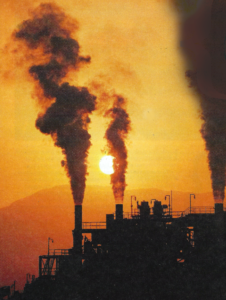
HE’s utility energy choices matter. These same energy choices emit GHG emissions and contribute to accelerating global heating (locally and globally). If that were not enough, the utility’s combustion power bias adds to the state’s costly air and water pollution impacts on our local communities and environment. But the real salt-in-the-wound impact is immediately felt by ratepayers from these expensive energy choices, infamously continuing to make Hawaii the most expensive energy market in the United States.
Hawaiian Electric’s big island power profile is far from unique for an electric utility still operating in the 20th century, and one heavily invested in old line combustion power plants with an energy bias firmly rooted in obsolete profit models.
Today’s big island electric utility profile strongly supports this conclusion:
HELCO-owned Oil-fired Combustion Power Plants (Oil)
Keahole: 77.6 MW (Combustion)
Puna: 36.7 MW (Combustion)
Kanoelehua: 21 MW (Combustion)
Waimea: 7.5 MW (Combustion)
Hill: 34.7 MW (Combustion)
Dispersed generation: 5 MW (Combustion)
Independent Power Producers
Hamakua Energy (oil 90% / biodiesel 10%): 60 MW (Combustion)
Puna Geothermal Venture (geothermal – variable): Power Specification: 38 MW / Actual power output; 12 to 15 MW (since 2018)
Clean Power Generation:
Puueo Hydro: 3.4 MW (HELCO owner)
Waiau Hydro: 1.1 MW (HELCO owner)
Pakini Nui Wind: 20.5 MW (Independent Power Producer)
Wailuku River Hydro: 12.1 MW (Independent Power Producer)
Hawi Renewable Development (wind): 10.5 MW (Independent Power Producer)
AES Waikoloa Solar: 30 MW + 120 MWh storage (Independent Power Producer)
Customer-sited Rooftop Solar: 121 MW (Independent Power Producers)
HE-proposed or early qualifying stages of development (tbd):
Hale Kuawehi Solar: 30 MW + 120 MWh storage (Independent Power Producer)
Keahole Battery Energy Storage: 12 MW storage only (HELCO owner)
Shared solar: 0.750 MW (Independent Power Producer)
Hu Honua BIOmass: to be determined…
Clean Energy Examples Hawaiian Electric is Failing to Lead or Follow …
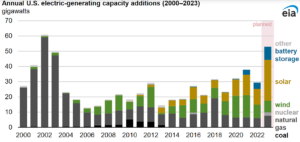
Outside of Hawaii, wind, solar, and battery storage are growing exponentially as a share of a new 21st century and technology-driven electric-generating capacity which is growing exponentially each year.
In 2023, wind and solar energy generation combined with battery storage accounted for 82% of all new utility-scale generating capacity developers plan to bring online in the United States, while growing as a share of new electric-generating capacity each year.
Utility-scale solar capacity didn’t start ramping up in the United States until 2010. As the cost of solar panels dropped substantially and state and federal policies introduced generous tax incentives, solar capacity boomed. As of January 2023, 73.5 gigawatts (GW) of utility-scale solar capacity was online and operating in the United States, representing in excess of 6% of the total U.S. grid energy generation.
Just over half of the new U.S. generating capacity expected in 2023 is solar power. If all of the planned capacity comes online this year as expected, it will be the most U.S. solar capacity added in a single year and the first year that more than half of U.S. capacity additions are solar.
Wind and solar are intermittent sources of generation; they only produce electricity when the wind is blowing or the sun is shining, but with energy supplies which will never be disrupted by energy wars or the world’s fossil fuel energy monopolies controlling daily market supply fluctuations and prices. Battery storage systems are increasingly installed with wind and solar projects, turning intermittent energy sources into firm energy outlets. This year, 2023, developers are on track to add 8.6 GigaWatts of battery storage power capacity to the national grid, which would double the total U.S. battery power capacity now in use.
None of these figures reflect the growing adoption of rooftop and battery storage at the residential level, growing from a fringe energy contributor to an integral clean energy role in freeing America from its historic imported energy dependencies, and in addressing national climate (GHG mitigation) goals. It merits repeating; batteries turn sun and wind electricity generation from these natural and intermittent energy sources into firm energy assets with excess energy stored and available for on-demand power requirements, and later use.
 HE’s (HELCO) pattern of bait and switch on its energy transformation path to renewable energy replacements from its fossil fueled power plant investments is a failure when measured in terms of lost clean energy opportunities. It is also a failure of imagination and innovation that extends back into several generations of complicit state PUC – utility decisions. The exception to this period of unenlightened PUC decisions rubber stamping the utility’s poor energy choices, was an all too brief fruitful period of PUC leadership with Jay Griffin, who chaired the Commission from 2019 – 2022, and represented a period of clean energy regulatory leadership and decisions at their best within the state.
One shining example of the Griffin-led PUC regulatory period was guiding the utility towards cleaning up its dirty energy track record of energy combustion and polluting energy sources. HE saw which way the wind was blowing at the PUC, and advance the proposal and process for the addition to Hawaii Island’s grid of the AES Solar – Storage general plant in Waikoloa. The $47 million plant features zero GHG emissions and zero polluting energy byproducts, is fully energy free of imported and local supply chain disruptions and energy cost hikes. The AES solar plant further serves as HELCO’s show piece for doing something right for a change towards advancing the State’s and the County’s clean energy economy.
Unfortunately, this single example of 21st century clean energy power on Hawaii island (at utility scale) is just that a single example. Yes, there is some utility movement towards reconciling the island’s legacy wind farms and their future, but even those limited examples are outliers to overall poor and inefficient business decisions by the utility in serving its fiduciary role of serving ratepayer interests.
The AES solar plant features the most reliable and the lowest cost energy option the utility has to offer ratepayers. In comparison to the HELCO’s combustion power plant the AES plant deliveries electricity to ratepayers as little as 1/3 the cost of some other utility combustion power sources within Hawaii Island energy portfolio.
When the heavily promoted Hu Honua burning trees-for-power plant was proposed, HELCO expected utility power supply costs to jump to $0.44 cent per KWh, and compared to the AES solar+battery Waikoloa plant at a mere $.09 cents per KWh. The AES clean energy benefits represented a stark comparison in terms of ratepayer savings and climate benefits. With ratepayers picking up the entire energy cost, it had little impact the utility’s plans.
Another outstanding and differentiating AES clean power advantage of zero emissions power production is represented in offering Hawaii Island residents the highest levels of energy efficiency at the lowest cost on the Big Island grid today — areas which combustion power plants cannot compete – period. The economics of combustion-based and legacy utility power choices on ratepayers is clear – they cost more, considerable more than clean energy alternatives available to HELCO and HE statewide.
Equally important, these inefficient and hazardous energy choices block the statewide adoption of abundant solar-wind-batteries firm energy alternatives, and achieving essential progress in transforming Hawaii into a clean, resilient. and self-sufficient energy economy.
The utility-led arguments that so-called firm energy can only be accomplished with last century combustion power plants is a false argument. Battery storage is the game changer, along with other energy storage options including hydro transform so-called intermittent energy sources into on-demand energy assets which far more cost effective and resilient that legacy combustion power plants. It is only a matter scale, not technology limitations.
The AES solar plant is expected to result in total avoided fossil fuel consumption by HELCO of 511,086 barrels of oil within its first 25-years of operation, along the climate benefits of zero associated greenhouse emissions and no air pollution. AES solar power today fulfills over 7% of Hawaii Island’s electricity requirements, and resulted in another HELCO first — a customer a rate decrease and corresponding cost reduction in their monthly power bills, which are the highest power rates within the state.
Conclusion
If Hawaiian Electric is unable and/or unwilling to transition itself into a clean energy utility designed to serve the interests of the state’s residents and commercial interests in a period of rapid change and increasing climate challenges, then it’s time to open up Hawaii’s electricity market to better market options — one which is designed to serve the public interest, address the state’s energy self-sufficiency and climate sustainability needs, and do it before it’s too late…
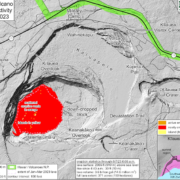
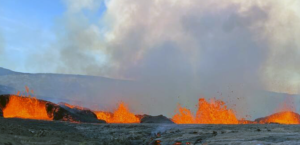 Kilauea, one of the most active volcanoes in the world, began erupting Sunday, September 10th, after a two-month pause, displaying glowing lava that is a safe distance from people and structures in a national park on the Big Island, but lasted only about one week.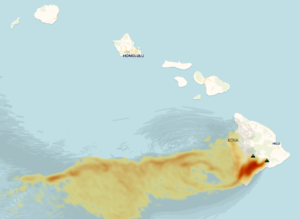
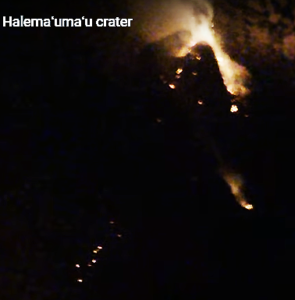 Kīlauea Erupts After a 3 Month Pause
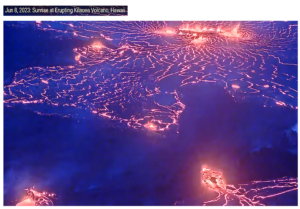 Opening phases of volcanic eruptions are generally dynamic, and Kilauea did not disappoint USGS scientists or the general public.
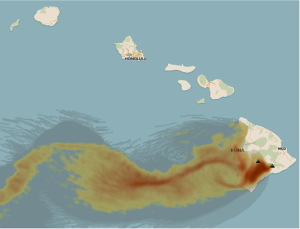 Vog is primarily a mixture of sulfur dioxide (SO2) gas and sulfate (SO4) aerosol. SO2 (invisible) reacts with oxygen and moisture in the air to produce SO4 aerosol (visible).
 Kilauea’s eruptive volcanic emissions, especially sulfur dioxide, can also turn local area skies into a strange yellow hazy tint, and when the tainted air comes in contact with cars and buildings. for example, it leaves a toxic residue or hazy coating on windows and can damage painted surfaces, including vehicles, and harmful to agriculture.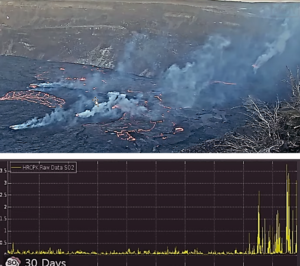
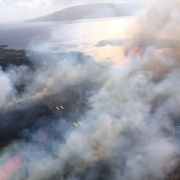
 Maui residents cope with loss and come together, as local government response stumbles.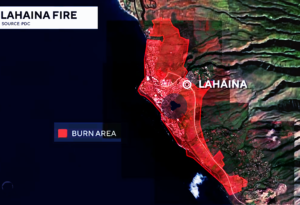
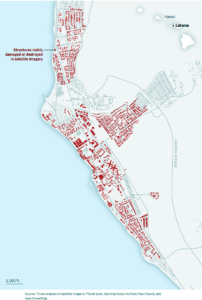
 Lahaina, Maui: Before
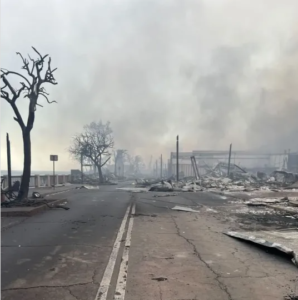 Lahaina, Maui: After
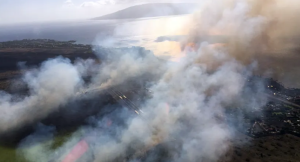 South Kohola, Hawaii Island (Maui in the distance)
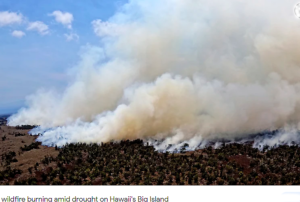 South Kohola, Hawaii Island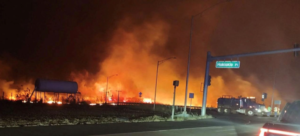

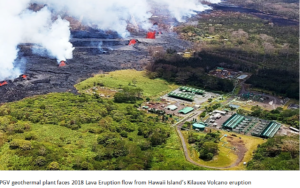
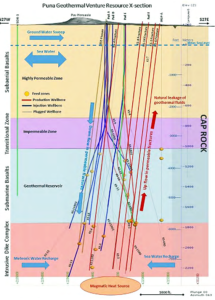 The PGV power plant, Puna Geothermal Venture, began commercial operation 25 years ago despite objections from local residents who are concerned by the company’s non-stop geothermal drilling and operations. The release of geothermal fluids and toxic hydrogen sulfide emissions, direct side effects of the company’s operations are key concerns of nearby residents. Recently, HELCO has proposed increasing the capacity charges for PGV under the new contract which will impact savings projections as they no longer receive the avoided cost of oil. Consumers islandwide would be impacted.
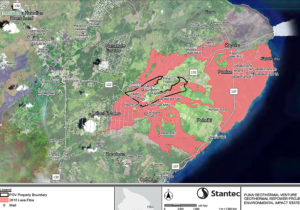 Even today, the East Rift Zone is seeing inflation as new magma is intruded below the surface. A very dynamic situation. Something PGV’s investors will need to consider as drilling is neither cheap nor results guaranteed. Investors will be needed to spend even more on PGV to replace existing power generation much less the funds for expansion. More on drilling, too. This uncertainty and risk goes beyond just nervous investors as ratepayers are paying for expensive fossil fuel generation in the meantime.

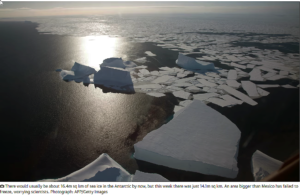 A new study shows an ancient ice sheet retreated at a startling 2,000 feet per day, shedding light on how quickly ice in Antarctica could melt and raise global sea levels in today’s warming world.
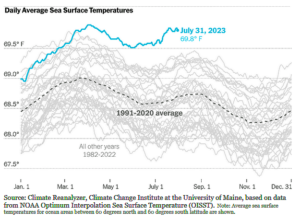
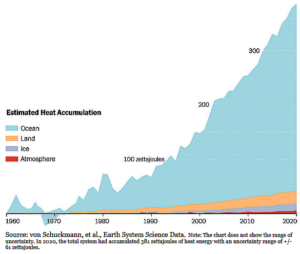
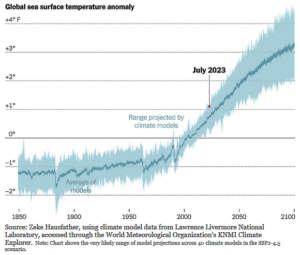
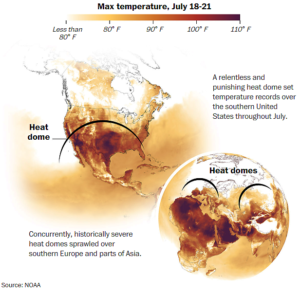 A rash of intense heat domes — zones of high pressure sprawled across the northern hemisphere — plagued Asia, southern Europe and northern Africa, North America and much of the tropics including the Caribbean. Extreme heat was even observed on several occasions across the southern hemisphere, where it is the middle of winter.
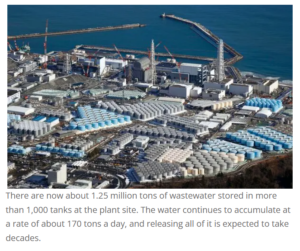 The implied Tepco argument and focus has been on the release of cesium-137 and its 30 year toxic lifespan into the marine ecosystem and food chain. The utility argues that its radioactive waste dumping activities are benign to the environment (meaning people, fish, and the marine ecosystem).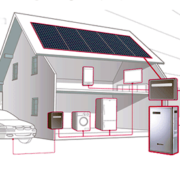
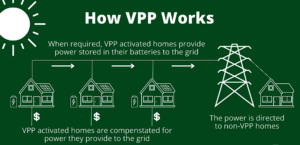 A Virtual Power Plant (VPP) is defined as a network of decentralized, medium-scale power generating units featuring flexible power options for consumer-sited storage and solar power generation systems.
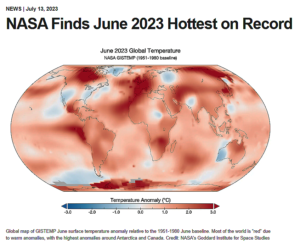 Electricity production (25% of 2021 greenhouse gas emissions) – Electric power generates the second largest share of greenhouse gas emissions and includes emissions from electricity production used by other end use sectors (e.g. industry). This 2021 NASA report total does not reflect the coming shift in energy demand off fossil fuels and to electricity energy consumed to support the coming electrification of most ground transportation.
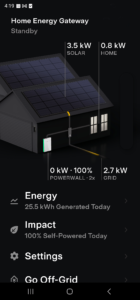 VPP home and community systems are the next generation in clean energy self-sufficiency and lower cost energy reliability, by introducing battery storage in combination with rooftop solar. And battery storage are projected to include electric vehicles serving more than just transportation needs, ad energy security for home owners in the form of a battery back-up system for the home with wheels.