BeyondKONA
  • Main
  • News
    • Climate
    • Energy
    • Technology
    • Politics & Policy
  • Video Library
  • Hawai’i
  • Analysis
  • About Us
  • Search
  • Menu
  • Twitter
Solar Wind Bess

Texas; National Leader in Renewable Energy?

July 5, 2023/1 Comment/in Climate /by BeyondKona

Today’s the Grand Old Party (GOP) more or less stands for the Gas Oil Pollution party, with the United States’ primary petrochemical production states of Texas, Louisiana, and Oklahoma leading the pack in historic Big Oil investment, and wielding the political power for blocking an enabling national policy on the road to a national clean energy economy.  These same petro states use the GOP political machine to push through policies (when their party is in the majority) to defund the EPA and cripple the agency’s environmental protection duties, while at the same time rolling-back and obstructing policies designed to address a climate crisis now sweeping the planet. They also seek to control the narrative, by defunding and denying scientific evidence linking the burning of fossil fuels to Global Heating now underway.

Monday, July 3, 2023 as it turns out was the hottest day ever recorded globally, according to the U.S. National Centers for Environmental Prediction. The average global temperature reached 17.01 degrees Celsius (62.62 Fahrenheit), surpassing the August 2016 record of 16.92C (62.46F) as heatwaves sizzled around the world. “It’s a death sentence for people and ecosystems,” said Friederike Otto, a senior lecturer at the Grantham Institute for Climate Change and the Environment. And it’s about to get worse.

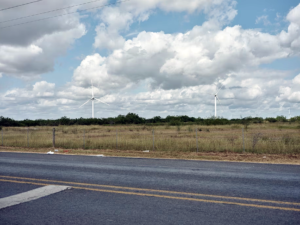
Texas Turbines San BenitoThe poster boy for this disconnection between blanket support for fossil fuels and blocking the advancement of renewable energy as national policy has been Texas. A classic example of of don’t do what I do, do what I say.  Like other southern states, Texas is is battling brutal climate-fueled heat waves now regularly reaching triple-digit temperatures.  This summer, like last summer, global heat waves triggered record levels of energy demand. In the case of Texas, and other oil and gas states suffering from the energy impacts of global heating, some might call this paradox “karma”.  Hinduism identifies karma as the relationship between a person’s mental or physical action and the consequences following that action.

And this summer, like last summer, renewable energy are the heroes of this story — yet they remain curiously vilified by politicians in the Lone Star State in spite of Texas’ national leadership role in a statewide clean energy transformation.  In recent years, renewable energy has been ramping up across Texas. The state has rapidly increased solar capacity, for instance, enabling as much as 16,800 megawatts of solar power to be produced on the grid as of the end of May. That’s roughly six times the capacity that existed in 2019 (about 2,600 megawatts), according to data from the Electric Reliability Council of Texas, the state’s grid operator.

The bottom line

This increase in solar energy, coupled with greater wind and storage development — is what has allowed Texans to beat the heat and keep their electricity bills down.  The lesson here for Hawaii is a reality already playing out in Texas and elsewhere.

The Texas Lesson

Several thermal-energy (combustion and nuclear) plants in the state went offline in recent weeks, as coal, natural gas and nuclear facilities appeared to buckle under extreme temperatures and shrinking maintenance windows.

The addition of solar and wind generation more than made up the difference for these so-called “firm” energy power plants. Solar, wind and storage (aka renewables) for Texas now represent roughly 35 to 40 percent of power generation at peak, compared with about 30 percent last year.

As BeyondKona has reported repeatedly; technological advances in wind and solar energy systems offer not only the best value on energy delivered to ratepayers, but zero emissions (no GHG) and no pollution energy option. They are also more than competitive against fossil fuels, waste-to-energy, and biomass combustion plants, and all which contribute to greenhouse emissions and more Global Heating.

Improvements in storage technology, most notable batteries, have also helped address renewables’ most-cited weakness: their intermittency. In Texas for example, better batteries mean air conditioners can reliably keep blasting cool air even on hot cloudy, windless days, and the same lesson applies to Hawaii’s goal in meeting self-sufficiency clean energy needs.

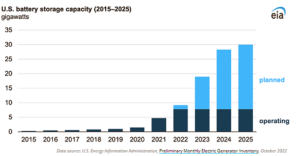
Texas is not exactly known for its bleeding-heart-liberal populace, generates more electricity from wind and solar than any other state. Of the 710 megawatts of new battery storage that went online across the United States in the first three months of 2023, about 70 percent was in Texas alone, according to data from S&P Global.

Part of Texas rapid energy transformation is due to its progressive energy permitting environment, an area Hawaii continues to lag behind in its slow journey towards a clean energy economy.


In Related Developments

Oil lobbyists spend millions to stall California’s game-changing climate bill

California bills would force large companies that do business in the state to report all emissions and crack down on bogus carbon offset claims

Two transparency bills in the California legislature would require corporations to disclose more information about their emissions and their efforts to fight the climate crisis. The oil and gas industry is spending millions to kill them.

While some oil and gas companies in California have expressed their support for rolling back climate change, industry opposition fits into an agenda of delaying action, said Ryan Schleeter, communications director at the Climate Center.

“Delay is the new Denial,” said Schleeter. “Climate denial won’t fly in this state and companies are smart enough to figure that out, so they delay as long as possible and squeeze out as much profit as they can” said Ryan Schleeter, communications director at the Climate Center.

https://www.beyondkona.com/wp-content/uploads/2022/12/solar-wind-bess.png 313 666 Bill Bugbee https://www.beyondkona.com/wp-content/uploads/2018/05/beyond-kona-logo.png Bill Bugbee2023-07-05 12:10:502023-07-06 10:50:50Texas; National Leader in Renewable Energy?
Solar Wind Bess

Hawaiian Electric; forward into the past

May 28, 2023/0 Comments/in Climate, Energy & Technology /by BeyondKona

Solar Roof HonoluluFor the past 10 years, the utility’s transition decisions to renewable energy have been notable, not so much in terms of actions, but in overall inaction. The system has historically worked well, for the most part, but time, technology, and necessity have turned obsolete utility operating assumptions on their head.

Increased demand for electrical energy is now being accelerated by a growing demand from the electrification of ground transportation. Hawaii in the crosshairs between grand expectations of a clean and self-sustaining clean energy economy, and how best to address the opportunities for change.  Front and center is how the state’s largest utility will best address the dual challenges of climate change adaption, and the ever-increasing cost of electricity on household and business budgets. And ratepayers remain in the crosshairs of the state’s largest energy monopoly, Hawaiian Electric, and neverending rate hikes.

Life as a Energy Monopoly

The business, regulatory, and financial structure of public electricity services are by design unique from any other form of commerce.  The underlying elements of risk and reward in private sector business ventures are mostly absent for electric utilities like Hawaiian Electric, replaced by income and profit guarantees. Risk, innovation, and cost performance are framed inside a business operation serving as an energy monopoly with publicly guaranteed (by ratepayers) returns on investment in exchange utility guarantees on minimum levels of public service provisioning; electricity delivered on customer demand.  This system has worked well for the most part for the last 100 years, but time, technology, and necessity have turned these obsolete utility operating assumptions on their head.

A monopoly is generally defined as limiting available substitutes for its product, engaging in price fixing, and creating barriers of entry for competitors, and is generally illegal within the United States, except in the exceptional case of utilities offering essential public services. Public utilities are regulated by, yes, a state Public Utility Commission, but generally accountable to both state and federal (FERC) oversight, which is not the case for Hawaiian Electric solely bound by state regulation, and SEC regulation as a publicly-traded company.

The system of utility-driven checks and balances has worked well for the most part in the past. but in the case of Hawaii’s energy present and future, have increasingly been called into question. Change is the culprit, and it is evitable, with a looming global climate crisis now in progress, clean energy technology advances that have blurred the line between power consumers and power producers, and pardon the pun, empower consumers to take control of their power needs.

Nobody ever said change is easy, and in Hawaii’s case, isolation from mainland energy suppliers, has placed a decades-old 100% statewide renewable energy (electricity) mandate by 2045 on an uncertain course and outcome.

Hawaiian Electric, for reasons not generally known, now finds itself struggling to balance its past, present, and future operating priorities. And how best to balance those operating priorities firmly rooted in the past with a statewide clean energy mandate, and at the same time supporting traditional profit models, investor expectations, and internal operating priorities focused on extending the life of its legacy investments in old combustion polluting power plants. All this is in the background, while the company faces a new generation of clean energy options and greater customer expectations.

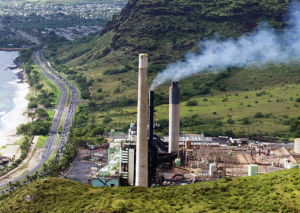
He Oahu Power PlantThe utility’s focus on preserving its past stranglehold on electricity production and delivery is already endangered as an increasing number of households and businesses who are taking control of their energy destiny by adopting rooftop solar and battery storage.   This consumer trend is driven by several factors beyond cost and energy savings, increasing energy security is a major factor in this transition, reducing grid power essentially to a backup energy source. Efficiency is another major factor favoring this cost-saving and energy-resiliency move by consumers.

The most efficient energy management outcome is the ability to produce, store, and deliver energy on-demand at the point of consumption, e.g., rooftop solar + storage.

Today’s utility model is not only obsolete; it is also unnecessarily outdated, costly, and energy inefficient.  The average loss of power between the power plant and consumers ranges between 5-15%, A challenging service topography, and fragmentation within Hawaiian Electric’s service territory, from transmission to plug, place power efficiency losses on the high end of the scale.

A transition to a clean and sustainable energy economy requires practical and equitable clean energy substitutes for Hawaii’s traditional and unsustainable dependence on dirty and imported fuels required to fuel the state’s outdated and inefficient grid-powered energy delivery system. — goals for the state and compliance with aggressive goals to reduce greenhouse gas emissions and increase the proportion of their energy portfolio produced from renewable energy sources, loosely defined as dirty energy options other than fossil fuels, and clean energy options, e.g.; such as solar and wind and storage.

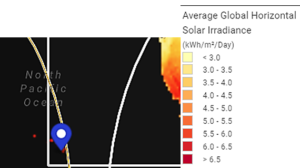
Hawaii Solar Radiation In The ZoneIn Hawaiian Electric’s own words… “In 2022, solar power provided about 17% of Hawaii’s total electricity, primarily from small-scale, customer-sited solar power generation that is the 10th-highest among the states.”

“In 2022, about 29% of the state’s total generation came from renewables.” That so-called renewable energy balance of 12%, was represented by burning toxic trash for power, cutting down trees, burning them to generate electricity, and continuing to engage and expand a geothermal plant, which has consistently failed to meet minimum power generation commitments since the 2018 Kilauea eruption, and advancing a highly questionable biofuel combustion plant agenda.

Nearly all the energy available on Earth is derived from solar radiation, especially in Hawaii. That includes the energy that drives natural processes from wind systems and the hydrological cycle to leaf photosynthesis.

Solar energy and its cousin wind energy have become the most important and cost-effective clean and zero-emissions sources for generating electricity and hot water systems.  Today’s battery and hydro-storage systems turn these variable clean energy sources into around-the-clock, reliable, and resilient. energy sources ready to serve all of Hawaii electricity needs.

The state’s largest utility is at a cross-roads, the opportunity for transformation has never been greater.  Holding onto an energy past neither serves its customers nor shareholders. It is a path to failure, one increasingly, which will not be subsidized by ratepayers or lost opportunities.

https://www.beyondkona.com/wp-content/uploads/2022/12/solar-wind-bess.png 313 666 Bill Bugbee https://www.beyondkona.com/wp-content/uploads/2018/05/beyond-kona-logo.png Bill Bugbee2023-05-28 06:04:412023-05-30 10:10:43Hawaiian Electric; forward into the past
Biomass Ghg Air Pollution 1

A Climate Reality : Truth or Consequences

March 20, 2023/1 Comment/in Climate /by BeyondKona

Our World is on brink of “catastrophic warming”, U.N. reports

In the first comprehensive report from the U.N. climate panel since the 2015 Paris Agreement, the UN reported this week… “Human activities have transformed the planet at a pace and scale unmatched in recorded history, causing irreversible damage to communities and ecosystems”.., according to one of the most definitive reports ever published about climate change.

The latest report from the U.N.’s Intergovernmental Panel on Climate Change provides world leaders with a gold-standard summation of modern climate science.

Leading scientists warned that the world’s plans to combat these changes are inadequate and that more aggressive actions must be taken to avert catastrophic warming. The same can be said for Hawaii’s less than transformative efforts to change, adapt, and survive climate-driven changes already underway.

A difficult global transition is happening right now, away from fossil fuels, deforestation, greenhouse-gas pollution and melting ice, and a global meltdown of the polar ice caps.

The report released Monday from the United Nations Intergovernmental Panel on Climate Change found the world is likely to miss its most ambitious climate target — limiting warming to 1.5 degrees Celsius (2.7 degrees Fahrenheit) above preindustrial temperatures — within a decade. Beyond that threshold, scientists have found, climate disasters will become so extreme that people will not be able to adapt.

Basic components of the Earth system will be fundamentally, irrevocably altered. Heat waves, famines, and infectious diseases could claim millions of additional lives before the century’s end.

The IPCC report shows humanity has reached a “critical moment in history,” IPCC chair Hoesung Lee said. The world has all the knowledge, tools, and financial resources needed to achieve its climate goals, but after decades of disregarding scientific warnings and delaying climate efforts, the window for action is rapidly closing.

Calling the report a “how-to guide to defuse the climate time-bomb,” Guterres announced on Monday an “acceleration agenda” that would speed up global actions on climate.   Emerging economies including China and India — which plan to reach net zero in 2060 and 2070, respectively — must hasten their emissions-cutting efforts alongside developed nations, Guterres said.

Both the U.N. chief and the IPCC also called for the world to phase out coal, oil, gas, and deforestation, which are responsible for more than three-quarters of global greenhouse gas emissions.

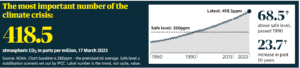
The IPCC’s report concludes humanity has fundamentally and irreversibly transformed the Earth’s system. Emissions from burning fossil fuels and other planet-warming activities have increased global average temperatures by at least 1.1 degrees Celsius (2 degrees Fahrenheit) since the start of the industrial era. The amount of carbon dioxide in the atmosphere hasn’t been this high since archaic humans carved the first stone tools.


An Ocean-Climate Linkage: Hawaii in the crosshairs

Climate changes are no longer theory or speculation but scientific fact and are apparent to anyone paying attention to the world around them.  We are witnessing an increasing sea-level rise, the by-products of the global melting of ice caps, and ocean heating.  Rising sea levels and warming seas are an especially deadly and impactful combination for island states, like Hawaii.

Though much of the synthesis of the IPCC report echoes warnings scientists have issued for decades, the assessment is notable for the blunt certainty of its rhetoric. The phrase “high confidence” appears nearly 200 times in the 36-page summary chapter. Humanity’s responsibility for all the warming of the global climate system is described as an unassailable “fact.”

A recent global pattern has emerged that is translating into costly climate outcomes. As oceans warm, the climate for creating super hurricane events with more energy, crushing winds, pounding waves, and tidal surges has become more common – a new norm for weather science and prediction.  These new climate-derived superstorm effects include slower movement, compounding and amplifying their effects on people, property, crops, commerce, and the social fabric of society.

The risks from even relatively low levels of warming are turning out to be much greater than scientists earlier predicted or anticipated — not because of any flaw in their research, but because human-built infrastructure, social networks, and economic systems have proved exceptionally vulnerable to even small amounts of climate change, the IPCC – UN report concluded.  Fish populations are dwindling, farms are less productive, infectious diseases have multiplied, and weather disasters are escalating to unheard of extremes.

These recent and scientifically-derived climate change findings represent a special concern for Hawaii’s residents and in establishing state economic, social, and environmental priorities, ranging from today’s unprecedented storms and climate-driven hurricanes to subtle changes in weather, rain, and wind patterns. Climate changes are also no longer limited to rising temperatures, but to changes in the atmosphere, more specifically, changes in the historic jet stream and wind patterns.


Melting Ice Caps

The Science and theory of Global Warming date back more than 50 years, when melting ice caps were often cited as one of the first signs of a man-made warming planet that was real and dangerous to humanity.

Rapidly warming oceans are now cutting into the underside of the Earth’s widest glacier and posing a major sea-level-rise threat.  Using an underwater robot at Thwaites Glacier, researchers have determined that warm water is getting channeled into crevasses in what the researchers called “terraces” — essentially, upside-down trenches — and carving out gaps under the ice. As the ice then flows toward the sea, these channels enlarge and become future potential breakpoints, where the floating ice shelf comes apart and produces huge icebergs.

These weak spots are like cracks in a windshield, said Oregon State University glaciologist Erin Pettit. One more blow and they could spiderweb across the entire ice shelf surface.  “This eastern ice shelf is likely to shatter into hundreds of icebergs,” she said. “Suddenly the whole thing would collapse.”

The failure of the shelf would not immediately accelerate global sea level rise. The shelf already floats on the ocean surface, taking up the same amount of space whether it is solid or liquid.  But when the shelf fails, the eastern third of Thwaites Glacier will triple in speed, spitting formerly landlocked ice into the sea. A total collapse of Thwaites could result in several feet of sea level rise, scientists say, endangering millions of people in coastal areas.

Similar outcomes are occurring within Greenland’s Ice Sheet, the largest ice mass in the Northern Hemisphere.


Global carbon budget running a deficit

At our current global pace of carbon emissions, the world will burn through its remaining “carbon budget” by 2030.

Doing so would put the long-term goal of keeping global warming to 1.5 degrees Celsius (2.7 degrees Fahrenheit) irrevocably out of reach.

Ghg Update Image

Deep, rapid, and sustained greenhouse gas emission reductions across all sectors will be necessary if warming is to be limited by 1.5 degrees Celsius, the report says, noting that global emissions should already be decreasing and will need to be slashed almost in half by 2030.

The 1.5 degrees Celsius temperature threshold is widely recognized as crucial because so-called tipping points become more likely beyond this level. Tipping points are thresholds at which small changes can lead to dramatic shifts in Earth’s entire life support system.

Despite its stark language and dire warnings, the IPCC report sends a message of possibility, said Friederike Otto, a climate scientist at Imperial College London and a member of the core writing team for the report.   “It’s not that we are depending on something that still needs to be invented,” she said. “We have all the knowledge we need. All the tools we need. We just need to implement it.”   


Friederike Otto’s message to the world is also one all of Hawaii’s elected officials and utilities must heed; slow-walking Hawaii’s transition to a clean and equitable energy economy will be more costly to Hawaii’s residents, ratepayers, and shareholders, especially when compounded by inaction, delay, and bad policy.

Wind SolarIf we continue, as state energy policy, to promote energy outcomes in support of 20th century polluting energy options, then we do it at the public expense. Expense that is measured in missed opportunity for a lower cost statewide transformation to a sustainable and self-sufficient clean-energy economy.  Time is no longer on our side, and repeating lessons already learned is no longer an economic or political option.


https://www.beyondkona.com/wp-content/uploads/2022/05/Biomass-GHG-Air-Pollution-1.png 2181 1644 Bill Bugbee https://www.beyondkona.com/wp-content/uploads/2018/05/beyond-kona-logo.png Bill Bugbee2023-03-20 12:28:362023-03-22 07:44:28A Climate Reality : Truth or Consequences
Biomass Plantjpg

Hawaii Supreme Court rules against Hu Honua 5-0 – What’s Next?

March 14, 2023/1 Comment/in Climate /by Steve Holmes, Contributing Editor

Huhonua 2The Hawaii Supreme Court struck down the appeal by Hu Honua regarding PUC denial of their proposed power purchase agreement.

Justice Mike Wilson will be retiring soon and with his brilliant Concurring Opinion, he leaves a lasting legacy. It goes far beyond this permit and clearly states that the PUC has an affirmative duty to address the Hawaii Climate Emergency Declaration and its connection to the Public Trust Doctrine in our Hawaii Constitution.

Hu Honua attempted to limit their GHG emissions analysis to only comparing stack emissions from their biomass plant to fossil fuel generators. This court opinion says they had to compare their emissions to less polluting alternatives like wind and solar.

A Climate Emergency declaration means business as usual is over and the PUC needs to step up the pace of decarbonization.

The Court’s decison also means that attempts by certain pandering politicians are doomed to fail. Because of our constitutional protections and the imminent threat posed by climate change to our public trust resources like coral reefs, these would be struck down.

A better idea, and better use of ratepayer dollars?

Battery Solar WindHu Honua, for instance, has been proposed for hydrogen generation but would need PUC approval. With this Supreme Court decision, that will not happen. Burning trees to split water and make hydrogen certainly isn’t green and isn’t cost-competitive because the energy required is too expensive and very inefficient.

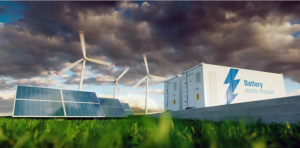
A better idea would be to repurpose the Hu Honua location, and its large utility connection, for grid-scale BESS (battery energy storage) and the addition of solar and/or wind. No trees to burn, no pollution to abate.

The Sierra Club has been advancing its national “Stop Coal” campaign, in which many old power plant sites have been converted over to large-scale battery storage sites, enhancing grid stability at no cost to the environment and surrounding communities.

These cost effective power conversions enhance resilience and grid efficiency, and in effect, provide voltage support that keeps grid power smoothly flowing around the clock. There is also Federal financing available for these projects, generally referred to as ESSA or energy storage service agreements, which serve as utility power purchase agreements, and where prices are locked in for 20 years at no upfront cost and which plant maintenance is included at no added costs to ratepayers.

Large new federal incentives are driving huge investments, so money is now flowing into Hawaii.  New batteries like iron flow and iron air are also bringing costs down compared to more traditional lithium battery storage. In both cases, utility scale battery systems are self-contained (containerized) and ready for quick and easy installation and modular activation after delivery to the site. Equally important, these same modular systems are easily scale up to meet future expansion, if required, and in all cases, can be paired with clean and renewable energy, as in solar and wind power generation.

Lessons Learned

Hu Honua always had an archaic approach to energy production and would have driven customer bills up instead of down.

This Hawaii Supreme Court opinion further  supported the PUC’s inclusion of its cost performance analysis in their decision-making on remand during the latest appeal, and despite Hu Honua attempting to argue the opposite.

From the start, Hu Honua has sought preferential rates outside the mandatory competitive bidding process, requiring ratepayers to pay for power than market conditions would otherwise allow. The court saw through all of this, justice and the public interest in the Court’s decision, which further served as an important environmental law precedent.

It is a great victory and our thanks to Life of the Land, Tawhiri, the Hawaii Consumer Advocate, and the PUC Commission and staff for a job well done.


https://www.beyondkona.com/wp-content/uploads/2022/12/Biomass-Plantjpg.png 1200 1200 Bill Bugbee https://www.beyondkona.com/wp-content/uploads/2018/05/beyond-kona-logo.png Bill Bugbee2023-03-14 10:33:282023-03-14 10:34:57Hawaii Supreme Court rules against Hu Honua 5-0 – What’s Next?
Solar Wind Bess

Hawaii Falls Behind National Transition to Clean Energy

March 13, 2023/1 Comment/in Climate /by Bill Bugbee

2023 Solar Market Share1


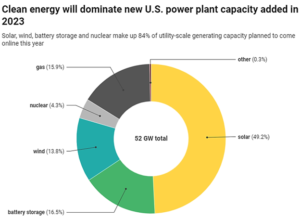
Clean energy is crushing the competition to supply new power plants for the U.S. this year, except perhaps for Hawaii’s political pursuit of last century energy options (combustion polluting power plants), as in burning trees and waste / trash for energy.

Based on January data from the U.S. Energy Information Administration, clean energy will dominate new US power capacity in 2023 with Solar, Wind, and Batteries leading the way and accounting for nearly all new power plant construction.

The star of the show is Solar

This abundant clean energy resource has risen from the margins of the utility sector to make up roughly half of the new planned capacity in 2023.  Meanwhile, rooftop solar has returned as the leading self-powered energy security option addition for commercial and residential buildings, with this energy sector enjoying a rapid recovery from previous Covid-related supply issues.

Of course, solar plants don’t produce around the clock the way gas, oil, or nuclear can. That limitation is driving the surge in battery installations to store surplus solar and wind production for use as needed (firm) and when it’s more valuable.

Batteries can also be charged from the grid, especially as EV adoption increases, and clean power adoption offers the additional benefit and role of off-setting increased electricity demand and the potential for added grid-generated greenhouse gas emissions in transition to ground transportation electrification.

Meanwhile, battery storage is beating out gas (primary mainland energy source for so-called peaker plants), and representing for the first time batteries displacing combustion energy options in the role of meeting “firm energy” needs for utilities — Senator Dela Cruz (HI) infamous and incorrect statements of 4 hour battery limitations is as out-of-date as his energy agenda for the state.

Hawaii’s Energy Politics

Undeterred from his political loses of 2022, with Governor Ige’s veto of SB 2510 and 2511, were bills rammed through the political process mandating the burning of trees and trash for power. Senator Dela Cruz and his political allies misguided dirty energy priorities for Hawaii’s energy future remain steadfast, and unenlightened.

During the current 2023 legislative session, Senator Dela Cruz flexed his political muscle once again with an energy agenda that includes support of SB-72 designed to cripple Hawaii’s PUC due diligence process (in representing ratepayer interests) of non-compliant dirty energy applications which come before the Commission.  He is also pushed SB 817 through the Senate, which amends the definition of “eligible business activity” within the state’s enterprise zones to produce (with taxpayer funding), dirty energy feed-stocks for biomass-burning power plants.

Another example of how outdated and expensive combustion (burn) power sources can’t complete with zero emissions / clean energy alternatives is how solar plus battery plants consistently come in at less than half the cost of biomass burn-generated energy, even as those biomass plants will enjoy public subsidies and waivers from state rules. The poster child for this insult to injury to the public interest is best exemplified by another Dela Cruz energy agenda item; his unwavering support of the infamous and discredited Hu Honua biomass plant (see previous BeyondKona coverage of this failed power plant proposal).

As of today, with the state Supreme Court determination in a clear cut 5-0 decision, rendered on March 13th, resulting in Hu Honua suffering it greatest legal loss to date — in what has been as a bad deal for the residents and ratepayers of Hawaii Island from the first day one it was proposed.  The Hawaii Supreme Court decision denied Hu Honua’s appeal of a previous Public Utilities Commission decision citing several areas in which Hu Honua repeatedly failed to satisfy basic requirements.

Every biomass plant (trees and trash burned for energy) allowed to go forward blocks a clean and renewable energy plant, available at lower energy cost to ratepayers, and ready to take Hawaii to clean, renewable, and yes, sustainable energy future.

Beyond Hawaii; it’s all about market forces, clean-power climate mitigation, ratepayers priorities

Fossil-fueled plants are expected to make up just 16 percent of new capacity additions completed in 2023, based on January data from the U.S. Energy Information Administration. Adding more fossil-fuel power plants to the national grid is rapidly becoming a utility-driven decision practice of the past. It is likely, based on present trends, there will be no new fossil plants built in the US within the next 10 years. And most people look forward to the inevitability of that day when it comes.

Carbon-free power plants are on track to deliver 84 percent of new capacity — that includes solar, wind, nuclear, and battery storage. That’s a larger share than last year, when clean power plants made up 78 percent of new capacity.

Clean and renewable energy still represents a smaller share of the nation’s total electricity production.  But this snapshot of the power industry in 2023 (outside of Hawaii) shows that clean energy is already set to be the dominant choice for new power plants, seizing that mantle from fossil fuel gas plants.

It’s also a coup for battery storage, which went from extremely fringe just a few years ago to the second-place spot for new capacity coming online this year.

https://www.beyondkona.com/wp-content/uploads/2022/12/solar-wind-bess.png 313 666 Bill Bugbee https://www.beyondkona.com/wp-content/uploads/2018/05/beyond-kona-logo.png Bill Bugbee2023-03-13 12:30:442023-03-13 18:12:46Hawaii Falls Behind National Transition to Clean Energy
Solar Person Graphic

Hawaii’s Energy Future has Arrived

February 16, 2023/0 Comments/in Climate /by BeyondKona

The energy future that we’ve long been waiting for is here.  Let’s take advantage of it.

We’ve known for decades that we should reduce the burning of fossil fuels and other materials to generate energy because of their harmful by-products on climate, health, and the global environment.  We’ve also known that solar, wind, and other clean and renewable sources are better energy options, but they were more expensive compared to most legacy energy systems.

Change is the great arbiter and in comes many forms. In this case it came in the form of new technology, Federal policy, and market forces each working to bring down the costs of clean and renewable energy.  Many of us have been waiting, and now the costs of solar and wind and battery storage have been reduced to such an extent that they are currently the least expensive and most equitable forms of energy now powering utility grids.

Bess Growth Projection 1Although macroeconomic and supply chain issues influence costs, the overall cost of PV solar and battery storage continues to drop with technology and manufacturing improvements. and efficiency advancements.  New energy projects pairing solar with battery storage are being built across the nation.  A number of them are located in Hawaii, and more are being planned.

Reliable, resilient, and clean (zero emissions) renewable energy options continue to drive down electricity costs for ratepayers. Batteries now are now fulfilling the role as on-demand firm energy assets, once the exclusive domain of expensive to build, operate, and polluting combustion-based power plants.

The recently enacted Inflation Reduction Act (IRA) is projected to drive nearly $3.5 trillion in the Federal government investment of new energy supply and infrastructure onto the grid, the majority of which will be intermittent renewable resources backed by batteries. The ICF Climate Center estimates IRA incentives could drive down the cost of solar energy by as much as 35% and wind by as much as 49% by 2030. The potential beneficiaries of the IRA financial incentives include Hawaii’s residents and ratepayers, businesses, and Hawaiian Electric, the state’s largest and publicly-traded utility.

Often missing in the discussion of Hawaii’s transition to a clean energy economy are the direct and quantifiable benefits this transition is contributing to the state’s economy. Certainly, lowering the cost of energy production should translate into lower utility fees for consumers, but that is just one example of the direct economic benefits to the state.

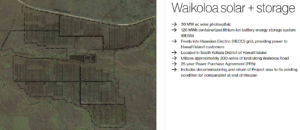
Clean energy projects by themselves are significant contributors to the state’s economy and climate goals, as exemplified by the recent AES Solar + Storage project on Hawaii Island. This one project will not only deliver unprecedented low cost clean energy to HELCO at $0.09 per kWh, but according to AES has produced 200 jobs and generated a total economic benefit for Hawai‘i’s local economy estimated upwards to $47 million. This one solar project also is expected to replace over one half million barrels of imported oil annually, while meeting the over 7% of the electricity needs for Hawaii Island.

Waikoloa Solar Storage ProjectHawaii is by no means standing still when it comes to clean and renewable energy.  Hawaii’s 100% renewable mandate by 2045 for energy powering the state’s two utilities may be a ways out, but challenges remain on the road to Hawaii’s 21st century clean energy economy.  The good news is as a state we are moving forward.

In total, recent solar projects in Hawaii demonstrate an encouraging trend and progress, including; the Lawai Solar and Energy Project on Kauai, which was at the time the largest solar plus storage peak-power generator in the world.  It combines 28 megawatts of solar photovoltaic capacity with lithium-ion batteries capable of storing 100 megawatt-hours, while delivering electricity on demand at only 11 cents per kilowatt-hour.  The average electricity rate for Hawaiian Electric throughout the state (excluding Kauai) ranges from 38 cents to the current high of 44 per kilowatt-hour for Hawaii Island residents.

Mililani Solar I is another example, located on former sugar-cane fields inland from Pearl Harbor, generates 39 megawatts of solar power for only 9 cents per kilowatt-hour.  Other completed and low cost solar projects include Kawailoa Solar in Haleiwa, the Waianae Solar Project, Waiawa Solar Power, and Kauai Solar.   Other solar projects in the works across the state include:

  • For Kauai, there is innovative West Kauai Solar Energy Project, the first integrated pumped storage hydropower, solar and battery project of its kind in the world.
  • Oahu: Kaukonahua Solar, AES West Oahu, Hoohana Solar 1, Kapolei Energy Storage, Kupono Solar, Mountain View Solar, Waiawa Phase 2 Solar, Kalaeloa Home Lands Solar, and Palailai Solar.
  • Molokai:  Kualapua Solar and Palaau Solar.
  • Lanai:  Lanai Solar Project.
  • Maui:  Lipoa Solar, Makawao Solar, Piiholo Road Solar, Waena Battery Energy Storage, AES Kuihelani, Kamaole Solar, and Paeahu Solar.
  • Hawaii Island:  Kalaola Solar A and B, Naalehu Solar, Keahole Battery Energy Storage, Hale Kuawehi Solar, AES Waikoloa Solar

While solar power brings down costs for both utilities and ratepayers, the pairing of battery storage with solar panels turns this once intermittent clean electricity source into a reliable and on-demand power asset better suited to the uncertainties of a changing climate than traditional combustion power plants.  Facilities that generate electricity by burning fossil fuel — or any other form of dirty energy combustion are increasingly costly and obsolete, and the sooner they are replaced the greater the public benefits.  After all, consumers benefit from lower electricity rates, and the environment benefits from fewer greenhouse gas emissions is a win-win solution for the planet, humans, and the economy.

Clean, renewable energy is the future, and the future is here.  It’s time we fully embrace it.


Special thanks to members John Kawamoto, Melodie Aduja, and Mark Koppel of Hawaii’s Clean Power Task Force for their contributions to this article. And mahalo a nui loa to the Honolulu Star Advertiser for co-publishing this article; February 21, 2023, Island Voices section.

https://www.beyondkona.com/wp-content/uploads/2022/09/Solar-Person-graphic.jpg 1091 1839 Bill Bugbee https://www.beyondkona.com/wp-content/uploads/2018/05/beyond-kona-logo.png Bill Bugbee2023-02-16 11:48:532023-03-12 07:46:13Hawaii's Energy Future has Arrived
Global Ocean Warming1

Off the Chart Temperatures Predicted as El Niño Returns in 2023

January 19, 2023/0 Comments/in Climate /by BeyondKona

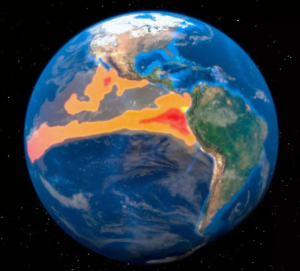
El Nino 2023 MapLast year was the fifth hottest on record, but with the return of El Niño — the climate pattern that warms the surface of the eastern tropical Pacific Ocean — 2023 could prove to be even hotter. The picture shows the predicted 2023 El Niño’s heating impact on the Pacific region and Hawaii.

Preliminary forecasts indicate the possibility of the return of El Niño later this year, which scientists say could cause “off the chart” temperature increases, along with record heat waves, reported The Guardian. This would make it “very likely” that Earth’s temperature will warm by more than the 1.5 degrees Celsius temperature threshold, above which the risk of deadly extreme weather and related crises — like large-scale drought, water and food shortages, famine, sea level rise, species die-off and loss of ecosystems — increases dramatically.

“It’s very likely that the next big El Niño could take us over 1.5C,” said head of long range prediction at the UK Met Office professor Adam Scaife, as The Irish Times reported. “The probability of having the first year at 1.5C in the next five-year period is now about 50:50.”

In 2016, the planet experienced its hottest year ever with the influence of El Niño. Earth’s weather patterns are driven by ocean surface temperatures and winds in the Pacific Ocean. These alternate between El Niño, the cooler La Niña — which was in effect the last three years — and conditions that are neutral.

“We know that under climate change, the impacts of El Niño events are going to get stronger, and you have to add that to the effects of climate change itself, which is growing all the time,” Scaife said, as reported by The Irish Times. “You put those two things together, and we are likely to see unprecedented heatwaves during the next El Niño.”

El Niño happens during winter in the northern hemisphere, which means the heat from it is more likely to be felt the following year — in this case, in 2024.

“We suggest that 2024 is likely to be off the chart as the warmest year on record. It is unlikely that the current La Niña will continue a fourth year. Even a little futz of an El Niño should be sufficient for record global temperature,” said professor James Hansen at Columbia University last year. He added that the decrease in China’s air pollution — which obscures the sun — was also leading to a rise in heating.

To date, human emitted greenhouse gases have led to a global temperature increase of about 1.2 degrees Celsius, causing heat waves and severe drought in Europe and the U.S., catastrophic flooding in Nigeria and Pakistan and extreme weather across the globe.

In many parts of the world, the El Niño-La Niña cycle causes the most weather variations from year to year.

“Science can now tell us when these things are coming months ahead. So we really do need to use it and be more prepared, from having readiness of emergency services right down to what crops to plant,” Scaife said, as The Guardian reported.

https://www.beyondkona.com/wp-content/uploads/2022/04/Global-Ocean-Warming1.png 457 719 Bill Bugbee https://www.beyondkona.com/wp-content/uploads/2018/05/beyond-kona-logo.png Bill Bugbee2023-01-19 10:21:152023-01-19 10:23:11Off the Chart Temperatures Predicted as El Niño Returns in 2023
Climate Change Brings Record Ocean Warmth

Climate Crisis, 2023

January 11, 2023/1 Comment/in Climate /by BeyondKona

Hawaii Rain BombHawaii’s remote location can no longer be considered to be a safe distance from what are now global climate change impacts.

Hawaii is facing climate changes ranging from subtle forms of increasing air and water temperatures to changes in traditional weather patterns, accompanied by the arrival of extreme weather events occurring with greater frequency and force.

Sea level rise and droughts are a fact of life residents of Hawaii now face, but such subtle changes too often fail to gain the general public’s attention. That said, there is nothing like an outsized storm to focus the public’s attention on changes now affecting historic and local weather norms.

The short scientific explanation of this climate-driven cause and weather effects: As average temperatures at the Earth’s surface rise, more evaporation occurs, which, in turn, increases overall precipitation.

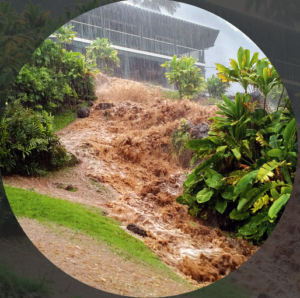
A recent trip to Kauai was a reminder how global climate changes are driving local weather changes. The conditions were serene on Kauaʻi the afternoon of Dec. 17th, 2022, but that all changed by nightfall with the arrival of an unprecedented powerful cold front which moved across the entire island chain resulting in flooding and destruction to property and infrastructure. Roads and bridges at times were near impassable, and the island’s rural infrastructure did not fair well to the extreme weather. The airport was closed for a time with planes grounded, as word spread of a Hawaiian Air flight inbound from Phoenix encountering air turbulence so extreme that a number or passengers were hospitalized on arrival in Honolulu.

Global Warming Map 2022 1

The atmospheric bedlam that erupted over eastern Oʻahu around sunset that same day was followed a few hours later with over five inches a hour of rain dumped onto Hawaiʻi Kai, which came pouring out of water-laden clouds accompanied by crashes with thunder and lightning.  The same cold front produced downpours across the rest of the state, engorging waterways, flooding roads,  and raising water in many streams by several feet in less than a hour.

By midnight, the thunderstorms and intense rainfall which followed, continued to whipped up torrents rain overall the islands and lower elevations. The Big Island leeward side did not escape the cold front which arrived with a non-stop cacophony of heavy rain, wind, thunder and lightning lasting most of Sunday night.

This was no normal storm, in fact it was a series of storms connected and driven by a massive cold front uncommon to the mid-Pacific region.

It was in fact the effect of a climate now in the process of global change — courtesy of our fossil-fuel emissions and legacy energy dependences.


Extreme weather caused 18 disasters in US last year, costing $165bn

The US endured a particularly painful year as communities wrestled with the growing impacts of the climate crisis, with 18 major disasters wreaking havoc across the country as planet-heating emissions continued to climb.

Storms, floods, wildfires and droughts caused a total of $165bn in damages in the US last year, $10bn more than the 2021 total and the third most costly year since records of major losses began in 1980.

Last year was “part of a trend of hyperactive disaster years across the US”, said Adam Smith, an applied climatologist at the National Oceanic and Atmospheric Administration (Noaa), which released the data. Since 2016, there have been 122 separate billion-dollar weather and climate events that have, in total, killed more than 5,000 people and caused more than $1tn in damages.   “We are seeing several trends of climate-enhanced disasters,” said Smith, noting that the US is seeing longer, more intense wildfire seasons, severe rainfall events and the sort of huge, category four and five hurricanes in the past few years that Noaa has not documented before in its historical record, which stretches back to 1851.

Relentless rain, record heat: study finds climate crisis worsened extreme weather, but that’s no surprise …

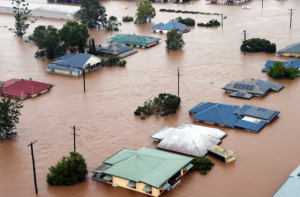
FloodingRelentless drought in California followed by rivers of rain,  extreme rainfall in the UK, record heat in China – some of the most severe weather events that have occurred around the world in the past few years were made far more likely due to the climate crisis, new research has found.

The analysis of extreme events in 2021 and 2022 found that many of these extremes were worsened by global heating, and in some cases would have been almost impossible in terms of their severity if humans had not altered the climate through the burning of fossil fuels.

“The extreme nature of these events is very alarming,” said Stephanie Herring, a climate scientist at the US National Oceanic and Atmospheric Administration (NOAA).

“We need to understand if these events are signs that things are getting hotter faster than we had expected. We know extreme heat is going to get worse, and additional research will help us better quantify future change.”

The fingerprint of climate change is being identified across the planet. The risk of extreme drought across California and Nevada was made six times worse by the climate crisis and a strong periodical La Niña climate event from October 2020 to September 2021, while, conversely, extreme rainfall that deluged parts of the UK in May 2021 was 1.5 times more likely due to global heating.

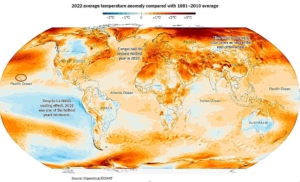
The world remained firmly in warming’s grip last year, with extreme summer temperatures in Europe, China and elsewhere contributing to 2022 being the fifth-hottest year on record, European climate researchers said on Tuesday.

The eight warmest years on record have now occurred since 2014, the scientists, from the European Union’s Copernicus Climate Change Service, reported, and 2016 remains the hottest year ever.


Ams Climate Report CoverThe Nexus of Climate meets Weather

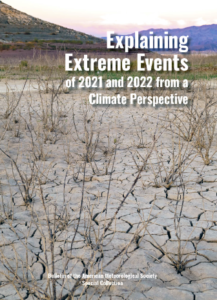
The American Metrological Society (AMS) annual climate report; “Explaining Extreme Events in 2021 and 2022 from a Climate Perspective” offers a plainly written recent as to cause-and-effect climate impacts and assessments of how human-caused climate change may have affected the strength and likelihood of individual extreme events.

AMS report link: https://www.ametsoc.org/ams/index.cfm/publications/bulletin-of-the-american-meteorological-society-bams/explaining-extreme-events-from-a-climate-perspective/

The report’s authors scientifically concluded:

    • “Human-caused climate change is an extreme disruption of the Earth system,” said Paul Higgins, associate executive director of the American Meteorological Society.
    • “We should expect it to lead to more extreme events, as this new research helps to show. We must do what we can to help people, and all life, thrive in spite of this danger.”

This was the eleventh edition of the report, offering a peer-reviewed analyses of extreme weather and climate across the world during the previous two calendar years. It features the research of scientists from across the globe looking at both historical observations and model simulations to determine whether and by how much climate change may have influenced particular extreme events.


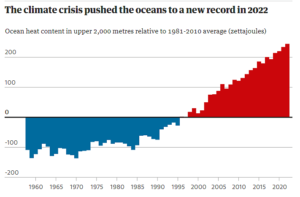
The world’s oceans were the hottest ever recorded in 2022

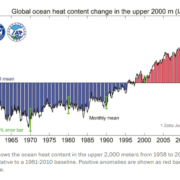
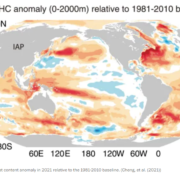
Ocena Sea Temps Rise 2022 GraphMore than 90% of the excess heat trapped by greenhouse gas emissions is absorbed in the oceans. The records, starting in 1958, show an inexorable rise in ocean temperature, with an acceleration in warming after 1990, demonstrating the profound and pervasive changes that human-caused emissions have made to the planet’s climate..

Sea surface temperatures are a major influence on the world’s weather. Hotter oceans help supercharge extreme weather, leading to more intense hurricanes and typhoons and more moisture in the air, which brings more intense rains and flooding. Warmer water also expands, pushing up sea levels and endangering coastal cities.

The temperature of the oceans is far less affected by natural climate variability than the temperature of the atmosphere, making the oceans an undeniable indicator of global heating.

  • Last year is expected to be the fourth or fifth hottest recorded for surface air temperatures when the final data is collated.
  • During 2022, we saw the third La Niña event in a row, which is the cooler phase of an irregular climate cycle centered on the Pacific that affects global weather patterns. When El Niño returns, global air temperatures will be boosted even higher.
  • A severe hot spell in China in February 2021 was made between four and 20 times more likely because of human-caused climate change, while acute drought in Iran, which it experienced in 2021, is now 50% more likely because of the greenhouse gases humanity has pumped into the atmosphere.
  • A swath of other severe impacts can be attributed, at least in part, to the influence of the climate crisis, including the weather that caused a dangerous wildfire in Cape Town, South Africa, in 2021 to be 90% more likely than if we had never heated up the planet and even the persistent cloudiness over the Tibetan plateau that reduced vegetation growth, caused, researchers say, by elevated global temperatures along with abnormal winds and localized pollution.

The compendium of research, presented by NOAA at a conference on Monday, draws together some of the latest examples of climate attribution, where scientists have managed to pinpoint the influence of human-induced climate change upon individual weather events and disasters.

Previously, scientists were very reluctant to talk about the climate change influence upon discrete events, preferring a more general probabilistic framing, but that this messaging has “evolved over time as the research has increased” into more exact attribution methods.

Using increasingly powerful climate models, along with historical observations, scientists are now able to provide more a precise, and rapid, assessment of the influence of the climate crisis on certain disasters. The heavy rain that caused devastating floods in Nigeria, Niger and Chad last year, for example, was made about 80 times more likely by the climate crisis, one study has found.

Herring warned that many of the temperatures now being seen are well beyond any modern historical norms and are pushing humanity into a new, dangerous state. A heatwave in South Korea in October 2021, for example, was so drastic, at almost 7F higher than normal, that it would be considered an event that would only happen every 6,250 years. But the climate models predict that this will become the new normal for South Korea by 2060 if planet-heating gases are not radically cut.

A subsequent study found the climate crisis made heatwaves 43 times more likely.

The same fate is well on its way to impacting temperature and weather norms across the Pacific region.

https://www.beyondkona.com/wp-content/uploads/2022/01/Climate-change-brings-record-ocean-warmth.png 603 1008 Bill Bugbee https://www.beyondkona.com/wp-content/uploads/2018/05/beyond-kona-logo.png Bill Bugbee2023-01-11 05:57:162023-01-11 09:05:02Climate Crisis, 2023
Biofuel

Rolling Blackouts – Hawaii’s Energy Future?

September 6, 2022/0 Comments/in Climate /by BeyondKona

Hawaiian Electric advises Big Island customers to cut their power consumption or face rolling blackouts

Last week was a big energy week for the state of Hawaii. First, there was announced shut down of the state’s last operating coal-fired power on Oahu, the state’s largest population center. It was a long time coming and part of the state’s dedicated transition off fossil fuels and onto a 100% renewable energy electricity grid by 2045. A power transition the state’s largest utility Hawaiian Electric continues to struggle with, and in what industry observers saw as a somewhat lackadaisical response to the long anticipated AES plant shut down.

Meantime, on the Big Island, Hawaiian Electric also discovered on Monday, August 29th, they had a problem with their Big Island Hamakua plant when the operators discovered they were out of an essential fuel additive, ammonia.  According to a local energy expect familiar with the matter, BeyondKona discovered that ammonia is somewhat in short supply, a supply chain issue further aggravated by the island’s remoteness to its suppliers.
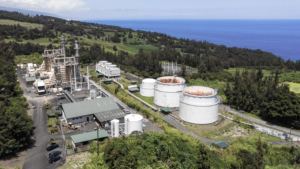
Hamakua Energy PlantIt is unclear how and why Hamakua Energy Partners allowed their ammonia supplies to just run out, but the consequences were clear enough.  Without the needed ammonia additive the plant would run out of fuel within hours and would be forced to shut down its 24×7 power supply to the utility grid – all this happened with extremely short public notice.

By Friday, September 2nd, (day 5 of the power restrictions) Hawaiian Electric spokesperson Kristen Okinaka went public to announce “With Hamakua Energy back online today, we expect to have sufficient power to continue to serve our Hawaii Island community. We sincerely apologize for the inconvenience and thank everyone for doing their part to conserve electricity and help keep the lights on.” 

Big Island customers reported experiencing continuing power disruptions after last week’s “all clear” utility announcement, including a nearly 10 minute blackout on Friday evening, September 3rd, in the north Kona area served by Keahole, the utility’s largest Hawaii Island power plant.

Cause and Consequences

The essential ammonia fuel additive shortage was only discovered once needed for the next fuel batch for the plant boilers.  And unlike a traditional power outages which are generally unplanned and come with immediate cause and effects, Hawaiian Electric and Hamakua immediately knew the cause and the effect, and without any immediate remedies were forced to provide utility customers with a minimum same day notice of potential and forthcoming power curtailments until Hamakua was back on line.  The Hawaiian Electric warning of possible rolling blackouts was understandable because electricity provided by the Hamakua energy plant represents a 60 MW supply to Hawaii Island’s grid, the second largest grid power capacity source for Hawaiian Electric’s Big Island customers.

The last minute (same day) notice to the public by Hawaiian Electric through media outlets warned customers of possible rolling blackouts that may occur during periods of peak of evening electricity demand, due to Hawaiian Electric’s significantly reduced electricity capacity. Utility customers were further advised to reduce their power consumption during the peak evening period of 5 – 9 pm for at least 5 nights.

Electric utilities are by regulatory-mandate designed to operate and provide a 24×7 electricity supply (without interruption) to their customers. Industry practice in fulfillment of this operating mission includes power production reserves that often exceed normal customer demand and employ stand-by or backup “firm” power which can be deployed on demand when unanticipated production shortages, customer demand, and/or power outages occur.

In this specific case, Hamakua Energy and the utility both failed in service planning preparedness for events both planned and unplanned resulting in the power production shortfall.  In short, both were caught flat footed.


Firm Energy, not as reliable as you thought

The Hamakua Energy facility is often referred to as a so-called “firm” power facility, meaning the plant provides power on-demand, and in this case, at a constant power production level around the clock to the Hawaii Island’s utility grid.  The Hamakua facility is often referred to as state of the art, but is actually a product of an outdated utility operating model who’s primary purpose in Hawaiian Electric ’s case is an example of extending the operating life of its fossil fueled power plant assets.

Hamakua with its biodiesel “green” credentials is considered in 21st century power generation terms more as lipstick on a pig, and for two primary reasons; first, its life-extending “green” operation primarily serves as a fossil power plant.  Second, although biodiesel does produce lower power plant emissions than tradition fossil fuel plants, even 100% pure biodiesel power plants produce and emit toxic NOX, fine particulates into the local air shed, and greenhouse gas emissions into the atmosphere.

The Hamakua plant is designed to burn mostly naphtha as it primary fuel, one of the dirtiest forms of refined oil-based products, and a low cost oil refining by-product  better suited to the production of asphalt than being burned as Naphtha to produce electricity.  The gooey Naphtha burns very dirty by any measurement, so much so, the EPA forced Hawaiian Electric and its subsidiary Hamakua Energy into air pollution abatement actions in order to achieve compliance with the Clean Air Act. By adding a small percentage of biodiesel and other chemicals into the fuel, the process, called Selective Catalytic Reduction (SCR), is a technical cheat that reduces air pollution and has been applied to stationary source fossil fuel-fired combustion power units for emission control since the early 1970s.

Hamakua Energy choose to add biofuel diesel into the plant’s fuel mix in order to clean up (to a minor degree) its emissions and to just operate within the absolute emissions threshold allowed in the Clean Air Act.   Together, with ratepayer dollars, Hawaiian Electric / Hamakua Energy saw this as a win-win opportunity to further promote the project as a clean and green biofuel power plant in the name of renewable power energy while continuing to pollute the island’s local air and affecting area residents.

Recent events at the Hamakua plant demonstrate just how fragile so-called firm energy is though a common dependency on remote supply chains to fulfill ongoing fueling and other operating requirements. Unlike the Sun and wind which do not require remote supply chains to function, Hamakua shares what all combustion-based power plants and technologies have in common;

  • First, its pollutes the air and contributes significant amounts of greenhouse gas emissions towards a global climate crisis now in full swing.
  • Second, regardless of the type of fuel burned to generate electricity, fuel is the Achilles Heal both in terms of fuel supply operating reliability and smokestack emissions, one of the many environmental and climate by-products.   Energy experts and other stakeholders advocating burning our way out off fossil fuels and our climate troubles is a false narrative, and with costs far greater than a gallon of fuel or the price per KWh in which most ratepayers focus their attention.

As a reliable “firm” power source, Hamakua Energy demonstrated that even under the best of conditions, the reliability label associated with firm energy is more a matter of promotion and luck, than reality.


Going Forward with Hawaii’s Zero Polluting Energy Future —
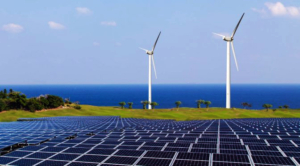
Wind SolarClimate scientists continue to discover evidence that climate change impacts are happening with greater frequency and scope than originally projected – with compounding effects worldwide. Weather patterns are changing, extreme climate events are increasingly becoming the norm rather the exception, and so the question remains, can we continue as business as usual, and can Hawaii afford to make costly energy decisions based on outdated assumptions?

Hawaii Island and the state operating within Hawaiian Electric’s grid can do better on the path 100% renewable electricity production. A night and day contrast can be found with Kauai’s KIUC electric utility cooperative. KIUC  is state’s best example of how to address climate change with respect to the land and people, and to do it cost effectively.  For KIUC, the Sun and wind mostly power of the island’s stand-alone grid.  PV solar panels produce power on cloudy days, the wind blows with some reliability, and batteries serve to ensure this zero emissions clean energy utility has power on demand for its customers, and when they need it.

Another benefit of solar and wind energy is that they are considered to be decentralized forms of electricity generation.  Decentralized electricity systems and microgrids are less prone to power failures, and are much greater in their resiliency to storm induced power shortages.  If part of a decentralized power system fails, the effect is generally isolated, with only minor effects on the larger grid system as a whole – an energy lesson painfully learned by the residents and businesses of Puerto Rico when their fossil fueled and centralized power system failed the population.  In 2017, Hurricane Maria hit Puerto Rico, knocking out electricity across the entire island and further exposing the vulnerability of the already fragile power grid. Some residents were left without electricity for more than a year.

With battery and hydro storage options coupled to wind and solar energy sources, the 20th century energy argument that solar and wind are internment and unreliable power sources is an outdated argument which no longer applies in today’s energy technology reality.

Hawaii’s electric utilities are required in a statewide effort to tackle climate change to increase their use of renewable energy sources to generate electricity.  The State has set a goal of 100% renewable electricity generation by 2045.  The target for 2030 is at least 50% of electricity generation from renewable energy sources, KIUC Kauai has already reach 70% their renewable energy threshold, while Hawaiian Electric continues to struggle in its transition off fossil fuels and old utility operating assumptions.

During this past legislative session the State set another energy goal for 2045, to be net-negative as to greenhouse gas emissions and to be carbon neutral.  It is clear today, a great proportion of the energy produced in Hawaii need not be from polluting and climate change contributing combustion-based energy sources, when clean, zero emissions energy alternatives coupled to energy storage options are not only available, but can provide uninterrupted electrical energy for long periods as power on-demand energy sources and when only limitation is not the technology, but choosing to scale solar-wind-storage energy installation to demand.  In the meantime, battery technology continues to improve in efficiency and performance, and prices continue to drop further advancing solar to Hawaii’s number one price performance energy option.

Today’s energy reality on Hawaii Island is mostly controlled by Hawaiian Electric, and primarily fueled by a legacy of diesel-powered plants.  While the Hamakua Energy facility burns mostly naphtha, one of several “dirty” energy oil-based energy options, Puna Geothermal Ventures (PGV), another Big Island power plant promoted by Hawaiian Electric as a renewable “firm energy” replacement for fossil fuels, but has proven to be lesson in how not to do geothermal with the generating facility located on the one of world’s most active volcanos sites, a painful lesson demonstrated during the 2018 volcanic eruption of Kilauea when lava flows forced the long term shut down of PGV power plant operation.

Let the Sun shine in..

Hawaiian Electric has one forever renewable energy option largely overlooked.  An option that is supported by the wide scale deployment of proven and distributed rooftop solar; increasingly coupled to localized battery power management and backup.
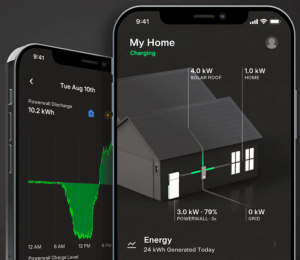
Powerwall Energy ManagemntImage a zero (polluting) emissions power source at the point of power consumption, and optionally connected to the local grid.  In this alternate universe, consumer power needs are all or mostly fulfilled by solar energy produced, stored, and consumed onsite for both residential and business power consumers.  Electricity costs are substantially reduced, power reliability is greatly improved, and past industry objectives to rooftop solar without storage, noted for creating power load balancing issues for some grid operators — is an 5 year old argument which no longer applies.

The energy technology is clean, forever renewable, proven, and represents the most efficient and cost effective means to close Hawaii’s clean and renewable energy power gap. This is today’s consumer power reality.  Distributed roof top solar and storage is also faster to deploy, and certainly lower in ratepayer costs underwriting utility scale renewable projects, power grid and other utility centric upgrades needed for the state’s largest electric utility to shed a long history of centralized fossil fuel power production, and potentially replaced with distributed power generation in partnership and co-management between power consumers and electricity-provisioning utilities.

Rooftop solar today represents only 17% Hawaiian Electric’s renewable energy contribution to the state’s RPS goal and in the state’s largest utility’s transition off fossil fuels. The statewide advancement of rooftop solar and storage is Hawaii’s clean and equitable energy future — and that energy future has arrived.

Any energy transition decisions we make today will define Hawaii for the foreseeable future, not just in terms of livability and sustainability, but how well we survive the planetary climate changes we have inflicted since the beginnings of the Industrial Revolution.

 

https://www.beyondkona.com/wp-content/uploads/2022/09/biofuel.png 186 271 Bill Bugbee https://www.beyondkona.com/wp-content/uploads/2018/05/beyond-kona-logo.png Bill Bugbee2022-09-06 05:23:102022-09-06 05:49:23Rolling Blackouts - Hawaii's Energy Future?
Hi Wave Crash

Greenland ice sheet meltdown will raise global sea levels faster than previously believed

August 29, 2022/0 Comments/in Climate /by BeyondKona

Human-driven climate change has set in motion massive ice losses in Greenland that couldn’t be halted even if the world stopped emitting greenhouse gases today, according to a new study published Monday.

The findings in Nature Climate Change project that it is now inevitable that the Greenland ice sheet will melt — equal to 110 trillion tons of ice, the researchers said. That will trigger nearly a foot of global sea-level rise.

The predictions are more dire than other forecasts, though they use different assumptions. While the study did not specify a time frame for the melting and sea-level rise, the authors suggested much of it can play out between now and the year 2100.

Ice Sheet Metldown1The new research projects a worse outcome than previous sea-level findings; first, by calculating how much ice Greenland must lose as it recalibrates to a warmer climate.

“Every study has bigger numbers than the last. It’s always faster than forecast,” William Colgan, a study co-author who studies the ice sheet from its surface with his colleagues at the Geological Survey of Denmark and Greenland, said in a video interview.

A one-foot rise in global sea levels would have severe consequences. If the sea level along the U.S. coasts rose by an average of 10 to 12 inches by 2050, a recent report from the National Oceanic and Atmospheric Administration found, the most destructive floods would take place five times as often, and moderate floods would become 10 times as frequent, which is particularly bad news for Hawaii’s coastal population centers throughout the island chain.

Last year, the U.N. Intergovernmental Panel on Climate Change reported the total ice loss from Greenland by the end of the century was projected to be round half a foot of sea-level rise from Greenland by the year 2100. That scenario assumed humans would emit a large amount of greenhouse gases for another 80 years, and even with advances with GHG reductions.

The study offers some hope.  Even if more sea-level rise is locked in than previously believed, cutting emissions fast to limit warming close to 1.5 degrees Celsius (2.7 degrees Fahrenheit) would prevent things from getting much worse.

Greenland is the world’s largest island and is covered with a sheet of ice that, if it melted entirely, could raise sea levels by more than 20 feet. That is not in doubt — nor is the fact that in past warm periods in Earth’s history, the ice sheet has been much smaller than it is today. The question has always been how much ice will thaw as temperatures rise — and how fast.

https://www.beyondkona.com/wp-content/uploads/2020/04/HI-Wave-Crash.jpg 720 1080 Bill Bugbee https://www.beyondkona.com/wp-content/uploads/2018/05/beyond-kona-logo.png Bill Bugbee2022-08-29 11:00:362022-12-08 12:29:55Greenland ice sheet meltdown will raise global sea levels faster than previously believed
Page 6 of 17«‹45678›»
Beyond Kona Logo

Hawai’i Today Articles

  • MoneyProfiting from the PresidencyFebruary 12, 2026 - 6:32 am
  • Global Heating ThermometerMy Mind is Made Up, Don’t Confuse Me with FactsJanuary 21, 2026 - 9:28 am
  • Ukraine Russ War LogoRussian Invasion of Ukraine; then and nowJanuary 20, 2026 - 5:35 am

BeyondKONA, OUR MISSION

Welcome to BeyondKona, a community web site designed to inform, educate, and promote Hawaiian values of caring for our aina.

BeyondKona’s mission is to advance an environmentally sustainable and 100% clean energy economy for Hawai’i.

BeyondKona.com features daily news, research and analysis, commentary and community conversation focused on Hawaii’s changing climate, growing clean energy economy, and the environmental, social, and political elements which are shaping life in Hawai’i and around the world.

RECENT POSTS

  • Profiting from the Presidency
  • My Mind is Made Up, Don’t Confuse Me with Facts
  • Russian Invasion of Ukraine; then and now
  • US Elections Are Legal.., so long as Trump wins

SITE DIRECTORY

  • Climate News
  • Technology News
  • Energy News
  • Politics & Policy News
  • Video Library
  • About Us
BeyondKONA, LLC. ©2026.
  • Twitter
Scroll to top