Lng Burn And Boat

Hawaii Gaslighted by LNG?

Story originally published Dec. 10th; updated Dec. 14, 2025

When Hawaii Governor Josh Green returned from a trip to Japan in late October, he brought back a signed agreement that marks a fundamental shift in the state’s clean energy policy. The deal centers on importing liquefied natural gas (LNG) to power Hawaii’s electricity system.

The announcement caught much of the public by surprise. Although Governor Green framed the agreement as supporting Hawaii’s clean energy transition, it effectively reverses the state’s historic clean energy commitments and puts its legislated Renewable Portfolio Standard (RPS) targets for 2045 into question.

Hawaii’s Renewable Portfolio Standard (RPS) history shows a progression from an early goal to the nation’s first 100% mandate by 2045, driven by legislation in 2001, 2004, 2009, and significantly in 2015 (H.B. 623), establishing targets for 10% (2010), 15% (2015), 30% (2020), 40% (2030), 70% (2040), and finally 100% (2045) renewable energy, shifting to net generation in 2022.

The strategic partnership that Green signed with JERA Co., Inc.—Japan’s largest power producer and a major global LNG player—positions LNG as a “bridge” fuel for Hawaii’s energy transition. Under this approach, LNG would be used to generate electricity until the state’s shift to a fully clean energy economy is supposedly complete.

The LNG agreement was signed in early October but was only made public after Green returned to Hawaii later that month. The Governor’s office has promoted the deal as a way to advance the state’s energy initiatives, leaning heavily on a recent study from the Hawaii State Energy Office, which reports directly to Gov. Green. That study identifies LNG as the preferred option for replacing oil and diesel currently used in Hawaiian Electric’s power plants as their energy source of choice.
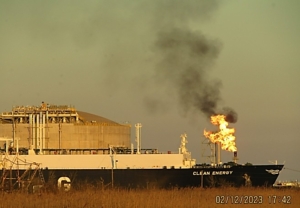
Lng Burn And BoatAccording to the U.S. Energy Information Administration, Hawaii has the highest average electricity prices in the United States, something any HECO ratepayer can attest to, yet petroleum still fuels most of Hawaiian Electric’s power generation.

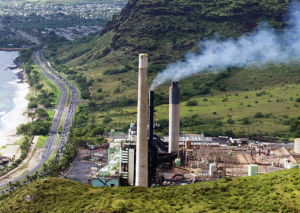
The utility’s power mix today consists of a mix of imported fossil fuels (mostly oil), with significant contributions from solar (rooftop and utility-scale), wind, one geothermal plant (when operational) and a sprinkling of biofuels, after while phasing out coal with the shut down of the Oahu AES coal-fired power plant in 2022.

Imported LNG is being presented as a potentially cheaper and cleaner alternative to today’s imported oil/diesel fuel now powering the utility’s outdated power plants. In all cases, HECO customers (aka ratepayers) foot the bill, regardless of the fuel used.

The Hawaii State Energy Office report suggests that LNG could serve as a bridge fuel for Oʻahu by replacing oil and diesel at existing power plants with what it describes as cleaner‑burning natural gas (LNG).

This official framing positions LNG as an interim step but not as a permanent long‑term energy solution for the state, but has the effect of  delaying, not encouraging a full speed ahead statewide transition into clean and self-sufficient renewable energy economy, with energy locally sourced, 24×7 reliable, and certainly less expensive to ratepayers, by no longer being dependent on imported fossil fuel sources.

The state’s energy report further outlines an extensive LNG infrastructure buildout for Hawaii. Who pays? Ultimately it will be Hawaii’s ratepayers.

The state’s LNG plan envisions offshore floating platforms and floating storage and regasification units (FSRUs), along with subsea marine pipelines linking these offshore facilities to Oʻahu coupled to a dedicated port‑side LNG gas reception terminal. Together, the project’s overall economic impact represents a major long‑term investment in a natural gas infrastructure at the very moment Hawaii is supposed to be accelerating toward its 2045 clean (zero emissions) RPS energy goals.


LNG Stakeholders …

HAWAII’s WINNERS
* HECO (the utility’s overweight combustion power plant investments and higher ratepayer costs favor utility profits firmly locked into a business as usual profit model fully subsidized by ratepayers and the cost of utility power to Hawaii’s ratepayers)
* JERA (Japan’s largest power generation company; and one of the largest LNG buyers in the world)
* Gas Advocates (Governor, Green-Hawaii State Energy Office, and LNG-Natural Gas money interests)
* Investors and beneficiaries specifically linked to JERA & Hawaii’s proposed LNG Project
* Hawaii Gas Company (LNG > natural gas provides a much needed life-line as the state’s RPS transitions off gas continues)
* Hawaii Politicians linked to the JERA deal, from the Governor Green on down the line
* Local Unions (unsustainable energy Union jobs linked to a statewide LNG build out and operation)
* HECO Ratepayers? (highly unlikely)
 
HAWAII’s LOSERS
* HECO Ratepayers (proven efficiencies and utility profit yields from Solar-BESS deployments translate into lower Ratepayer energy costs… period… the substitution of higher cost LNG enables HECO to avoid and otherwise replace the state’s transition into Solar-Bess Energy generation and on-demand energy provisioning with LNG, which will inflate ratepayer energy costs, not lower them.
* Hawaii’s 100% 2045 RPS Clean Energy Mandate; Hawaii’s statewide clean energy transition to clean energy self-sufficiency through locally-sourced energy options replaced by a LNG infrastructure and likely permanent presence based on the natural gas energy dependency it represents as an imported fuel for the state’s primary electricity grid
* Hawaii’s Clean Energy Economy will be another casualty in a move to LNG, delayed and possible replaced by a large LNG investment in the state — with no end-game in sight with this imported energy source
* Statewide Transition to Zero Emissions Energy (locally-sourced) grid energy sources
* HECO Ratepayers pay and pay .. (as Solar, Wind, BESS energy options are replaced) by costly imported LNG statewide energy dependencies
* Hawaii’s GHG Emission Abatement Goals / RPS 2045 100% clean energy deadline is relegated to vague future energy goal transition, instead an achievable reality


Hawaii State Energy Office; LNG cost savings report assumptions, on which Governor Green relies to support his LNG deal, are based on incomplete assumptions and only a partial accounting of potential of solar and wind energy cost off-sets, as the state report acknowledges an incomplete benefit accounting of solar-wind-battery benefits as in “some solar” cost offset assumption (apparently an incomplete afterthought in their calculations), thus weighting the report’s conclusion favoring LNG as “the” energy option of choice supporting Governor’s mission to Japan.

___

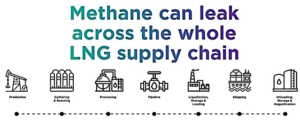
Lng Supply Chain Leaks

LNG is not a “clean” bridge fuel

LNG is associated with extensive lifecycle emissions, local pollution, economic volatility, and potential to delay renewable energy make it a problematic choice for long-term energy security and climate goals

LNG Environmental & Climate Impacts

  • Methane Leaks:Methane (the main component of LNG) is a powerful greenhouse gas, and leaks occur during extraction, liquefaction, transport (ships), and regasification, worsening global warming.
  • Life Cycle Emissions:The entire LNG process (extraction to use) results in more overall greenhouse gas emissions, potentially more than coal in some cases, say Evergreen Action and Yale E360.
  • Infrastructure Footprint:Building extensive LNG infrastructure (terminals, pipelines) destroys ecosystems and creates local pollution.

LNG Health & Community Impacts

  • Air Pollution:LNG facilities emit harmful pollutants like sulfur dioxide, nitrogen oxides, and particulate matter, increasing risks of respiratory illness, cancer, and heart disease for nearby, often low-income, communities (frontline communities).
  • Explosion/Leak Risks:LNG facilities pose risks of fires, explosions, and hazardous leaks.

LNG Economic & Geopolitical Downsides

  • Higher Consumer Costs:LNG exports can raise domestic gas and electricity prices for consumers in exporting countries,
  • Energy Security Risk:Relying on LNG can lock nations into another volatile fossil fuel, creating dependency and price instability, rather than achieving true energy independence through renewables.
  • Delayed Transition:Investing in LNG infrastructure slows the shift to cleaner renewable energy sources.


Hawaii’s Abundant Solar & Wind Energy to the Rescue
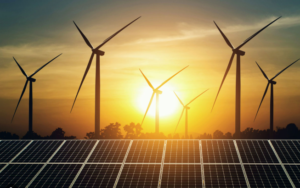
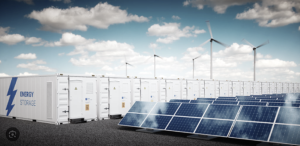
Solar & Wind TogetherHawaii’s abundant sunshine ensures that solar energy makes compelling case as the state’s primary clean energy resource, from rooftop systems to large-scale grid deployments, and everything in between.  This is truer today than ever before. The advent of battery storage technology couple intelligent energy management software and powered by solar energy assets and large scale wind turbines is a winning energy combination made for Hawaii today, and not at some future and otherwise uncommitted date.

With the advent of battery storage connected to solar and wind generation assets, the issue of so‑called “firm” energy has largely disappeared, as these same clean energy resources now serve as intelligent, 24/7 energy management systems for both end users and utilities.

As solar became a proven and cost‑effective energy source, utility adoption of solar farms and other large‑scale projects turned these installations into essential grid management assets. Solar continues to strengthen its business case as adoption scales from single-building rooftops to large industrial solar generation sites (solar farms).

The solar landscape fundamentally changed when battery technology was added to solar systems at both residential and utility‑scale installations more than ten years ago.

This is especially true in sunny Hawaii, where there is a growing and proven business case for integrated Solar + Wind + BESS (battery) systems capable of meeting 100% or more of the state’s electricity needs. Rather than relying on LNG as a supposed magic bullet for HECO’s operational challenges, or on other costly energy distractions, Hawaii can look to these clean energy solutions to address its diverse energy needs.

Today, unlike in the recent past, deploying solar without battery storage (BESS) at any scale is analogous to a car on blocks without wheels, fully dependent on a last‑century grid connection. When solar and/or wind generation is paired with battery storage and power management systems (BESS), a wide range of clean energy options becomes possible for both system owners and the interconnected utility. In effect, solar plus battery storage and management systems are often more technologically advanced than the public power systems to which they connect, functioning as self‑sufficient microgrids on rooftops while also supporting utility grids by sharing and managing power flows from local solar generation sites to remote and interconnected grid assets.

Always Available

  • Addressing Intermittency: The primary challenge with solar and wind is their intermittent nature (solar doesn’t generate at night or on cloudy days; wind generation varies with weather). This makes them “non-firm” on their own, until arrival battery power storage and management systems.
  • Storage as a Bridge: BESS acts as a bridge between generation and consumption. It stores excess electricity generated during periods of high production and low demand, and releases it during peak demand or when generation is low.
  • Hybrid Synergy: Combining solar and wind in a hybrid plant leverages their complementary generation profiles (wind often peaks at night/winter, solar during the day/summer). Integrating a BESS allows operators to offer a stable, predictable, and dispatchable output, essentially “firming” the variable renewable energy supply. 

Capabilities of Hawaii’s combined clean (zero emissions) energy options today:

  • Dispatchability: Systems that can deliver power on demand, much like traditional firm sources (e.g., natural gas or coal plants), ensuring a continuous power supply 24/7, subject only to routine maintenance.
  • Grid Stability: BESS (battery technology) can instanously respond to grid needs, providing essential primary and ancillary services like frequency regulation, voltage control, and ramping support, which enhances overall grid stability.
  • Resilience: The combined system can provide backup power and form microgrids, increasing 24×7 energy resilience, and replacing fossil fuel power plants design to serve as “firm energy” assets supporting  the grid, offering lower operating costs to ratepayers and as measured in costly impacts to Hawaii’s unique environment. 

A pivot to LNG energy will not solve Hawaii’s structural energy problems.

At all levels of the utility’s operation from end-users-to-shareholders, HECO’s priorities have repeatedly pointed towards the utility’s preservation of its obsolete combustion power plants and other capital investments often running on life support.


  • Switching fuel sources into an inexhaustible supply of LNG-natural gas may represent an opportunity to rebalance the utility’s asset investments (from dirty to more dirty clean energy), but it is also not sustainable, overly costly, and a deadend energy strategy, not a bridge to the state’s RPS transition.  Meanwhile, readily available sunshine and wind, could power the state’s  modernization goals and coupled to proven energy storage assets operate with 24×7 power supply, and without supply issues or excessive public costs.


  • The utility’s service reliability issues will not go away by just switching the utility’s fossil fuel dependencies from one fossil fuel import supplier to another. HECO remains dependent on decades old and increasingly obsolete combustion power plants, and their current business model supports the status quo, while ratepayers pay the bills of excessively high energy, climate, and environmental costs driven by the utility’s obsolete operating strategy.


  • The preservation of Hawaii’s unique environment depends on clean, zero emissions energy and an affordable living standard.  Hawaii’s high cost of combustion energy today plays a primary role inflating energy costs and the state’s costs of living; impacting Hawaii’s household affordability and business profitability as well placing Hawaii’s future at risk..


  • For full time residents of Hawaii, the primary stakeholders in the state’s energy future, today’s energy decisions for better or worse will impact future generations of Hawaii’s residents and the state’s economy, as politicians and energy insiders decide the state’s energy future and that of it’s well-intended and legislated (RPS) transition to a clean and self-sufficient energy economy…
He Oahu Power Plant

Solar – Wind – Batteries are less costly, more efficient than Carbon Capture

Ccs Carbon Capture FansCarbon capture and storage (CCS) technology has been promoted for the past 5 years as the fossil fuel energy sector’s Moon shot. Its promise has been to address global heating and enable a lesser form of global clean energy solutions needed now to get humans off an addiction to oil, gas and coal in various energy formats.

It is an equally important objective in promoting CCS project solutions for some vested interests at preserving their business-as-usual dirty energy investments. It is also a bulwark  from a global economy moving off fossil fuels out of necessity, while discovering the social and economic benefits in the electrification.

Carbon capture and storage has been a favorite promise from old-energy stakeholders to provide an answer to global heating with a solution that further preserves legacy fossil fuel market dependences and the profits of sector investor interests.   It was simply a false promise, but hopeful, promoted by vested fossil fuel interests in the hope they could have their cake and eat it too when facing mounting public, scientific, and regulatory pressures to clean up their energy act and soon.

So far, billions of dollars have been invested, and years later, Carbon Capture ventures and experiments have failed to bail out the fossil fuel energy sector as some had hoped.

Carbon Capture’s Notable Points of Failures:

  1. : Approximately 80% of projects aimed at commercializing CCS technology have ended in failure. In the power sector, the failure rate is even higher, with close to 90% of proposed global carbon capture capacity failing at the implementation stage or being suspended early.

  2. : Many CCS projects have struggled to achieve profitability, even with substantial government support. For example, the Petra Nova project in Texas, once considered a flagship CCS initiative, faced numerous technical setbacks and financial disappointments before being mothballed.

  3. : CCS projects have encountered various technical problems, including difficulties in capturing the promised amount of CO2 and concerns about the long-term storage of captured carbon.

  4. : The sheer scale of global CO2 emissions (37 billion tons annually) makes it challenging to implement CCS at a meaningful level. The cost, energy requirements, and infrastructure needed for large-scale carbon capture operations are prohibitive.

In short, the promise and commercial viability of CCS has largely failed to deliver on its climate mitigation expectations, yet alone provides the fossil fuel sector an unjustified lifeline. CCS, with heavy public funding and private investments, repeatedly has demonstrated a track record of operating failures and commercial underperformance.

Yes, despite billions of dollars and years invested in various forms ofCarbon Capture the CCS technology (with substantial support from the fossil fuel and government sectors),  CCS projects have just not succeeded in achieving their twin goals of climate mitigation and business as usual for dirty energy interests.

CCS carbon capture technology, according to a new study published in Environmental Science and Technology, examined two scenarios across 149 countries through 2050 to determine the effectiveness of CSS tech and which included to key categories of analysis:

  1. one in which the countries transition 100% of their business-as-usual dirty energy sources replaced by  wind-water-solar (WWS) clean energy sources, and
  2. the another scenario, in which carbon capture (CC) and synthetic direct air carbon capture (SDACC) were linked to business-as-usual dirty energy sources.   In the second scenario, the dirty energy mix linked top carbon capture mitigation measures included coal, gas, and oil fossil fuel energy sources.

Both scenarios accounted for the same improvements in energy efficiency, Clean Technica reported. The study compared the energy costs, public health impacts, and changes in emissions with each scenario.

The study examined the two scenarios across 149 countries through 2050: one in which the countries transition 100% of their business-as-usual energies into renewables, or wind-water-solar (WWS) sources, and another scenario in which policies invest in carbon capture (CC) and synthetic direct air carbon capture (SDACC).


The benefits of investing in clean energy, including solar, wind, hydropower, coupled to battery storage make these zero emissions renewable energy combinations proven clean energy options available today to most countries. They represent no less than the most cost-effective, reliable and resilient, climate-mitigating energy options on the path to pollution-free energy, and a global clean energy economy.

Climate Change Before & After

A Clean Energy First

Two years ago, President Biden and congressional Democrats passed the poorly named Inflation Reduction Act (IRA), now stimulating America’s clean energy economy and reducing America’s overall greenhouse gas and carbon emissions fueling Global Heating. Since the IRA stimulus, hundreds of thousands of clean energy jobs have been created across America.  Americans have also claimed over $8 billion in tax credits tied the purchase and deployment of energy efficient and climate-friendly technologies for their homes and businesses.

Ira Graph 2IRA benefits are designed to stimulate America’s transition into a clean energy economy.  Individual taxpayers also benefit from the IRA program by enabling the advancement of rooftop solar and battery storage systems, now stabilizing a national energy grid increasingly challenged by climate impacts.

The Inflation Reduction Act’s investment dollars have and are advancing America’s clean energy economy ranging from R&D ventures to manufacturing and to the wide scale installation of domestic clean energy systems and technology, each contributing to the reduction of a costly national dependence on yesterday’s gas and oil energy economy.

Ironically, or by President Biden’s design, a sizable component of newly created IRA clean energy jobs have been positioned in states and districts that favored Trump in both 2020 and 2024 election cycles. A move some have described as designed to slow GOP efforts targeting an IRA roll-back as more Red states invest in clean energy, once the exclusive domain of Blue states. Predictably, president-elect Trump publicly stated on several occasions his intentions to get rid of the IRA, and at minimum “claw-back” the IRA’s remaining funds while instead advancing his oil and gas dirty energy agenda and donor priorities.

It has been a Cinderellian four years for clean energy in the United States. The Bipartisan Infrastructure Law, the CHIPS and Science Act, and the landmark Inflation Reduction Act (IRA) have leveraged grant and loan programs, tax credits, and other policies to catalyze more than $1 trillion in manufacturing, infrastructure, and clean energy investments since Joe Biden took office. As a result, communities from coast to coast are getting much-needed electric infrastructure upgrades, global companies are setting up shop to build important stuff, and we’re even making solar cells stateside again.

Now, in the twilight hours of Biden’s watch, the feds are hustling to clean out the cupboards, allocating as much remaining IRA funding as possible to keep its fate out of the hands of Donald Trump.

The beneficiaries of Trump’s energy plans are the already enriched national fossil fuel energy sector energy, who historically have dominated US energy policy and national energy subsidies. Not surprising, this same industrial sector is now the primary source growing Global Heating liabilities impacting the country and the planet.  Fires now sweeping through southern California coastal cities are the most recent example of costly climate-fueled disasters.

Ira Funding Remaining 12 24In response to a hotter planet, the Inflation Reduction Act (IRA) is also  delivering the most significant climate investments ever seen in the United States. If the present trends hold, it is likely that the IRA tax credit totals will eclipse all other funding types from the legislation, meaning a highly diversified national deployment of solar generation at the time it is needed most.  Key IRA program funding not listed in figure 1 graph include; the Greenhouse Gas Reduction Fund, Home Energy Rebates, and individual taxpayer clean energy tax credits:

Hawaii; IRA Beneficiary?

In 2024, Hawaii received significant climate funding from the Inflation Reduction Act (IRA).

  • The state was awarded $68.5 million for a major climate resilience project led by the University of Hawaii’s Sea Grant College Program
  • This project, called “Aina Restoration Through Community Governance to Advance Climate Resilience in the Hawaiian Islands,” aims to restore ecosystems and improve resource management.
  • Additionally, $20 million in federal funds were allocated to 17 Native Hawaiian organizations for climate resilience efforts

Following IRA funding, was part of the Department of the Interior’s Kapapahuliau Climate Resilience Program, in support of the following initiatives, including:

  • Raising climate change awareness
  • Restoring native forests and ahupuaa-based communities
  • Protecting ancestral burials
  • Promoting Native knowledge and practices
  • The state also received $9.1 million specifically for climate resilience efforts

Hawaii also benefited from other IRA-funded programs in 2024:

  • 16 applications for the Rural Energy for America Program (REAP), requesting $3,891,223
  • 8 projects under the Powering Affordable Clean Energy (PACE) program, requesting $387,904,375
  • 2 projects under the Empowering Rural America (New ERA) program, requesting $64,432,692

These investments demonstrate the significant and positive impact of the IRA on Hawaii’s climate resilience efforts in 2024.

What Hawaii and the nation can expect from the new Trump administration in the way clean energy policy remains to be seen. Based on recent Trump statements, the talk is of clean energy funding rollbacks, ongoing cause & effect climate denials, and ill-informed policy statements and political plays boosting greater national fossil fuel dependencies.


Hawaii; IRA & Climate Stimulus Funding

Hawaii’s Senator Schatz, as a senior member of the Senate Appropriations Committee, has been at the forefront of advancing the state’s climate resiliency and clean energy efforts, emphasizing the importance of supporting Hawaii’s recovery from recent disasters while also investing in long-term resilience and development in preparing for a changing and hotter climate.

Senator Schatz was also instrumental in securing significant IRA and related federal funding for Hawaii, particularly advancing initiatives related to the Inflation Reduction Act (IRA) and other key sustainability priorities including over $6 billion in direct federal funding for Hawaii.  Schatz further secured for the state more than $68 million in new federal funding, now heading to Hawaii and designed to improve state climate and disaster resilience, along with additional $20 million allocated for Native Hawaiian climate resilience projects, marking the first time the federal government is funding Native Hawaiian-led climate initiatives.

How well the state applies these new funding sources towards readying the state for growing climate impacts remains to be seen. This much is clear, time is running out for debate as the window of opportunity on climate change preparedness impacts Hawaii and the world.


Putin Nato At War With Russia

The Future Arrived without much fanfare

Modern humans (Homo sapiens) have existed for approximately 300,000 years. Over that time we have evolved, along with our knowledge of fire, and the role it plays in extending human lifespans.

Anthropologists, archaeologists, primatologists, psychologists, and political scientists all agree that warfare is an ancient phenomenon deeply rooted in human history. War has also played a significant role in shaping human evolution and the development of modern societies.

EvolutionTechnological advancements have and continue to play a crucial role in shaping human history. It has also been a constant and transformative force shaping military strategies and capabilities with broader social, political, and cultural implications throughout most of human history.

Over time there have also been fundamental transformations in combat strategies and military capabilities. The scale of conflicts has also evolved, bringing us all closer and closer to the edge of extinction. One of the most significant developments in this long line of historic change occurred during the mid-20th century, marking the introduction of nuclear weapons at scale.

Growing up in the 1960’s.

The two decades following the end of World War 2 laid a foundation for today’s diverse forms of warfare, along with the social, economic, geopolitical, and environmental repercussions.

My school buddies and I had grown up with drop drills and other useless nuclear war countermeasures. Living in fear of nuclear war had become commonplace, but locked away in deep recesses of our minds.  However, an all too recent and defining moment in human history arrived on the weekend of October 27-28, 1962.  On the cusp of that weekend we finished our school day. It was Friday, and like most kids we were looking forward to the weekend.  We generally followed a pattern often repeated when classes were over for the day. We would walk the same route home and stop off at the local store for snacks.   But this Friday was different. Traffic at school was more intense, with more kids being picked up by their parents than usual. We shrugged the moment off and headed home on foot.

Cuban Missle CrisisIn the background, the Cuban Missile Crisis had been building all week, and we soon discovered would come to a climax over the weekend.  As we walked home we talked about bomb shelters and what to do if missiles with nuclear warheads started flying in our direction, and mostly about our general anxiety without admitting our fear.

As we entered the local grocery store that Friday afternoon what we found on arriving was surprising; it was unusually crowded and frantic.  Adults were overloading their shopping carts with (any) canned food, among other things. This was the first confirming sign that this Friday afternoon in October was different.  There was also something in the air, unlike anything we had experienced before.

Saturday was unusually quiet, and by Sunday morning we all sighed with relief that the unthinkable moment of human extinction had passed, and that we dodged a bullet; nuclear armageddon. None of us slept very well that weekend – that much I clearly remember.

The 1960s were marked by a strange combination of changes. After the missile crisis, it was a period of hope and great expectation for most of the world. The Space Race was in its early stages, the Beatles arrived in America, and change was in the air.  The transistor radios we carried in our pockets were one more sign of the emerging modern age of technology now apart of our daily lives. In the background of this decade of change and hopeful excitement, there was the business-as-usual horrors of war to behold as the Vietnam War heated up.  By the end of the decade (just a few years later) that defining moment in October of 1962 seemed a lifetime ago, filed away in memories to be forgotten.

Hawaii’s False Alarm; Nuclear Attack

On January 13, 2018, at 8:07 a.m. HST, Hawaii experienced a false ballistic missile alert that caused widespread panic.

The Hawaii Emergency Management Agency mistakenly sent an Alert an audio and text to most residents smartphones: “BALLISTIC MISSILE THREAT INBOUND TO HAWAII. SEEK IMMEDIATE SHELTER. THIS IS NOT A DRILL“.

Fueling the false alarm was a period of heightened tensions between the United States and North Korea, with both countries exchanging nuclear threats – which together contributed to the believability of the alert. The Nuclear Attack Alert offered a lead time of 5 minute warning ahead of the reported inbound nuclear weapon. For many residents and visitors it was the real thing, and five minutes of their life they would not want live over.

Days of Future Past

Today’s world is beset by a climate crisis of human making – a true game changing impact to the world and humanity.

Asymmetric military threats are increasingly tied to technology and somewhat leveling the playing field between advance nuclear-capable nations military and the rest of the world.  As regional wars rage, new threats from old enemies to a world at peace are on the rise. Threat multipliers to peace include Russia, China, Iran, and state actors with lower entry thresholds through terrorism and regional threats of war. The United States’ global economic and military dominance is increasingly challenged on multiple fronts, signaling more nuclear and non-nuclear threats to the United States, and by extension much of humanity.

The arrival of the digital age and global heating are just two examples of recent human-driven transformational changes at a planetary scale. The impacts of these global changes further exceed the sum of their social, political, environmental, and cultural impacts now underway.  All together, today’s world is much more complicated than the bad old days of the so-called Cold War period, with global changes now occurring at an ever increasing pace.

In the background, accelerating technology advancements with lower points of entry are also being weaponized,. One example is drone technology, once sold to hobbyists and now an essential weapon of war, as recently demonstrated in several current hot zones marked by regional warfare.

Artificial Intelligence is another example of the latest jack-in-the-box technology. AI is truly a 21st century change-agent, ready to pop out of its box without warning and change the human equation, possible for better or possible for worse.

The Internet was once viewed with great promise, a problem solving communications efficiency tool connecting an otherwise disconnected world.  It fulfilled that promise and more, and has proved essential to the daily lives of most modern humans. The promoters of AI tech are not promising similar benefits, rather they have ideas without fully understanding the implications of technology and the full implications of automated systems deployed globally which think for themselves and may otherwise produce outcomes the promoters of AI have so far failed to consider or develop and put in place counter-measures to control undesirable outcomes.

In the end, it is not about technology being good or bad, but rather how its used. Nuclear bombs or nuclear-medicine are a case in point.

Humans have choice, and choice is what mostly separates humankind from all other living things on Earth.


Rooftop Solar Energy

Kona Pacific, a case for solar

Kona Pacific is a long established condominium complex located within the Kailua-Kona downtown area. It is also an example of solar energy benefitting condominium owners and renters tapping into Hawaii’s abundant sunshine, both as a source of electricity generation and hot water. Each offers benefits which are not limited to Hawaii’s utility-scale solar installations or the rooftops of single family homes.

Hawaii’s home and condo residents are facing challenges of rising ownership costs. One such cost is linked to living in a state with increasing electricity fees already the highest in the nation.

Non-profit homeowners associations are particularly challenged in going solar in order to reduce their electricity expenses, yet they cannot leverage solar tax credits or taxable depreciation most homeowners adopting solar enjoy today.

For condo owners and residents there is a financing approach designed to serve their shared residential ownership needs.  Outside investors offer solar financing packages designed to off-set installation fees, with no upfront capital cost, and instead employ a power purchase agreement for condominium owners and residents. In this case, financing of solar installations and ownership of the solar system remains with the solar service provider, on average a 25 year contract period and which includes solar system operating maintenance.

Kona Pacific Solar StoryOne successful example has been Kona Pacific condominiums just off downtown on Walua Road, which took advantage of this opportunity 10 years ago and had installed a 100 kw solar array at a substantial savings over HELCO (HECO) commercial rates to meet their common area energy usage. The Condo association’s solar service agreement has worked well, but has also been also subject to a fee escalator clause adjusted to inflation.

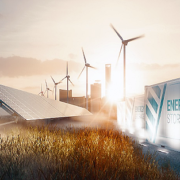
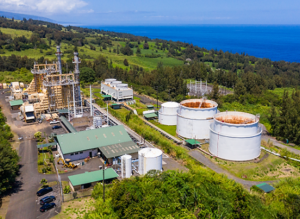
The association’s cost per kilowatt hour went up over time and the overall projected savings were less than expected 10 years ago. Off-setting some, but not all of the inflation factors responsible for rising costs in the association’s original solar service fee agreement, Hawaiian Electric did not raise their rates over time as fast as originally estimated.  Still the original agreement operating savings was less than expected by the association.

The solution was a solar repowering project by the original developer which extended out the contract period another 25 years, and which included new and more powerful solar panels, new micro-inverters, and new wiring. The new agreement for the association had no fee escalator clause, and guaranteed a rate 30% lower than the utility rate for the life of the agreement, a win-win for the condo association and residents. Again, no upfront cost and generous tax incentives leveraged by investors drove the retrofit.

Calculating solar savings over a future time period is always speculative as rates are impacted by external forces like world market prices on oil. Hawaii is moving to 100% renewables energy, so this goes away as we meet our statewide renewable energy electricity goals, but other costs like replacing aging utility infrastructure, fire prevention measures, and insurance costs will continue to have an impact.

Homeowners associations often can’t budget for solar as reserve funds aren’t structured to tackle large new and unanticipated costs. They struggle just to address maintenance items like pipe repairs and painting. Raising monthly fees is never popular, so a no upfront cost solar financing option that lowers energy costs, and in some cases offer energy security with the addition of battery storage at scale is perfect solution for condominium owners and residents. .

Overall, in the case of Kona Pacific, updating the original solar and equipment offered a 30% savings from utility electricity costs, guaranteed for the life of  the contract. This option also provides quality assurance as the developer won’t put in cheap equipment that will fail 5 years down the road. They own the system for the 25 year contract and will make sure that they install reliable equipment. The other benefit over other solar financing is that you only pay for energy actually produced and used. Typically energy usage sees some minor seasonal changes in electricity demand with the addition of extended periods of hallway lighting that increases in winter months, even in Hawaii.

Kona Pacific, in addition to the solar power purchase agreement (PV array), has installed a solar hot water array, also under its own power purchase agreement, offering savings to the association over the original central hot water using gas.

Financing is the key.

Climate Change Before & After

Biden’s Policies; addressing a Hotter Planet

The most important change to our planet as we head into the autumn of 2024: the Earth is continuing to heat dramatically.

Scientists have said that there’s a better than 90% chance that this year will top 2023 as the warmest ever recorded.

– UPDATED –

PROBLEM

Paleoclimatologists were pretty sure last year was the hottest in the last 125,000 years. The result this summer has been a non-stop set of super-weather events driven by an ever hotter planet. A Social and economic run of disasters plastered media outlets with pictures of floods, floating cars through streets underwater and people fleeing for their lives.  Global Heating (aka Climate Change and Global Warming) is increasingly making life on this most habitable of planet very difficult, and in some places increasingly impossible. And it’s on target to get far, far worse.

Possible the biggest thing change in the months ahead will be the outcome from the American presidential election, which presently looks as if it is going down to the wire.

Thes 2024 election is fundamental on several points as to the future direction of United States, as it will decide America’s power future and transition into a clean energy economy.  The consequences of rolling back science and progress in our global transition to a clean energy economy is no less impactful to all Americans, than how quickly we honestly and effectively address the unabated temperature rise now underway.  The possibility of political delays and/or failure into an essential transition to clean power can be summed up in word: catastrophic.

Donald Trump gave an interview last week, in which he laid out his understanding of global heating. He summed up his climate-change denial theories in just two words…”It’s weather.” 

SOLUTION

The second-biggest thing happening on our planet right now: clean and renewable energy has arrived at commercial scale previously only dreamed about, and from the most logical and straight-forward global clean energy options; the Sun and wind. By some calculations, we’re now putting up a nuclear plant’s worth of solar panels every day around the world, and this has put the old and dirty energy fueled global economy on the edge of complete replacement.

In California, there are now enough solar farms and wind turbines that day after day this spring and summer these pollution-free energy sources supplied more than 100% of the state’s electric needs, and for long stretches. There were also now enough batteries connected to the state’s grid that they become the biggest source of power for California’s after-dark economy and forty million residents.

In China, it looks as if carbon emissions from its historic coal-driven economy may have peaked – they’re six years ahead of schedule on the effort to build out clean energy renewables.

In Hawaii, solar power plants with battery storage are slowly, but surely, turning the state’s dirty energy combustion power plants into obsolete relics of an energy past dependent on the state’s imported energy suppliers.

POLITICS

(If) Trump wins the 2024 presidential election, he promised, beginning on day one, he would become a “dictator” and order “drill, baby, drill”.   Reported earlier, Trump has meet with key power players within the fossil fuel sector for a “one billion dollars” ask in campaign contributions, telling his oily audience … “I’ll fix it”.  Big oil is also doing its best to raise money on behalf of Trump. Never has an industry sector so powerful politically and economically imagined in their wildest dreams they’d find a former president and 2024 candidate for sale to the highest bidder.  The Washington Post reported a couple of weeks ago, Harold Hamm (who is also reported to be worth US$18.5 billion making him the 63rd wealthiest person in the world, and in his own words told the Post  …”we’re working incredibly hard to raise as much money as he can from the (dirty) energy sector”. “We’ve gotten max-out checks from people we’ve never gotten a dollar from before.”


Biden’s green policies. and IRA bill (passed 2023), will save 200,000 lives and have boosted clean energy economy, data shows

Two separate reports find policies will save Americans from pollution in coming decades and so far have added nearly 150,000 clean energy jobs.

The environmental and clean energy climate policies of Joe Biden’s administration will save approximately 200,000 Americans’ lives from dangerous pollution in the coming decades and have spurred a surge in clean energy jobs, two independent reports outlining the stakes of the upcoming US presidential election have found.

The first full year of the Inflation Reduction Act (perhaps Biden greatest accomplishment as President), was a sprawling clean energy-climate bill passed by Democratic votes in Congress in 2022, with VP Kamala Harris enabling the deciding vote which made possible nearly 150,000 transformative clean energy jobs, according to a new report by nonpartisan business group E2.

Nearly 3.5 million people now work in growing clean energy sector in the US, more than the total number of nurses nationwide, with 1m of these jobs centered in the US south, a region politically dominated by Republicans.

Clean energy jobs grew by 4.5% last year, nearly twice as fast as overall US employment growth, and account for one in 16 new jobs nationally, the report found.

  • New roles in energy efficiency led the way, followed by an increase in jobs in renewable energy, such as wind and solar, electric car manufacturing and battery and electric grid upgrades.

But the future of the IRA, which provides tax credits and grants for new clean energy activity, is a flashpoint in the election campaign, with Donald Trump vowing to “terminate Kamala Harris’s green new scam and rescind all of the unspent funds”.

The former president and Republican nominee has accused Harris, his Democratic opponent, of waging a “war on American energy” and called for an end to incentives encouraging Americans to drive electric cars.

Harris, who has promised in unspecified ways to build upon the IRA, has attacked Trump for “surrendering” on the climate crisis as well as in the US’s attempts to compete with China, the world’s clean energy manufacturing powerhouse.

Bob O’Keefe, executive director of E2, said the IRA has helped lead “an American economic revolution the likes of which we haven’t seen in generations”.

“But we’re just getting started,” Keefe added. “The biggest threats to this unprecedented progress are misguided efforts to repeal or roll back parts of the IRA, despite the law’s clear benefits both to American workers and the communities where they live.”


UNDER THE THUMB OF A NEW TRUMP ADMINISTRATION

Should Trump return to the White House, he will need congressional approval to completely repeal the IRA, although his administration could slow down and even claw back funding allocated but not yet released for clean energy projects, such as the $500m pledged for a green overhaul of a steel mill in JD Vance’s home town of Middletown, Ohio.

If a new Trump administration came to pass in 2025, he would have more power over the future of air pollution regulations set by the Environmental Protection Agency (EPA) than during the Biden presidency.   Any major environmental and climate policy rollbacks will have a heavy toll upon public health.  A new analysis of 16 regulations passed by the EPA under the Biden administration (started in 2021) findings reveal Biden’s regulatory reforms are on track to save 200,000 lives, save tax dollars, and prevent more than 100 million asthma attacks by 2050 by cleaning up historic toxic air pollution sources.

  • Trump has directly promised oil and gas industry executives a fresh wave of de-regulation (the regulatory dismantling of President Biden’s reforms, should he return to the White House. This will likely occur (if elected), with or without the $1bn in campaign contributions demand Trump placed on oil and gas stakeholders.
  • Project 2025, a conservative blueprint dismantling public benefits and regulatory protections was authored by many former Trump officials. Although disavowed by the Trump campaign, the Project 2025 sets forth a roadmap for dismantling regulatory protections in various key Federal agencies, including the EPA. A rollback of environmental rules and protections in the politicization of decision agency making and priorities are the essence of the Project 2025 roadmap.  These changes are designed to put polluters in charge of air and water regulations, and put millions of Americans at needless risk of cancer, heart disease and asthma,” said Symons.
Solar Wind Bess

Hawaiian Electric, Operating in Hawaii’s Best Interests?

Energy Alarms

Hawaii Island residents awoke to alarming news in February, and then again in March. Hawaiian Electric (aka HELCO) warned customers that the utility’s electricity services (which most County residents take for granted) would be facing rolling service blackouts and potential service disruptions of one or more hours in duration – and to be prepared for a loss in service.

Hawaiian Electric’s combustion turbine CT-1 unexpectedly tripped offline kicking off a local power crisis in the making.  In the meantime, Hawaiian Electric’s Hill Plant Unit No. 5, Keahole CT-5, and Puna Steam Plant were unavailable due to maintenance and repairs – following a script for failure, the Feb-March service disruptions were one more example of a perfect storm, increasingly common within Hawaiian Electric’s service territories.

Local headlines followed; “Hawaiian Electric initiates rolling outages”, and in the following month, “Hawaiian Electric asking Big Island customers to conserve power due to down combustion power plants.”

The utility’s service reliability weaknesses are several, but it boils down to a primary dependency on combustion (firm) power plants designed to wastefully generate electricity at high-to-maximum energy levels around the clock, regardless of consumer demand.  These firm power plants are combustion-based, meaning they produce power by burning various polluting source fuels. Regardless of a “renewable energy” label some of the utility’s plant operators promote who are not directly burning fossil fuels, the fuels these plants typically burn is neither sustainable or clean energy, and has recent history indicates, proving increasingly unreliable.

Hawaii Island’s Utility Experience

In the February service disruption, the first domino to fall was independent power producer Hamakua Energy, which unexpectedly tripped offline late in the afternoon of the 13th.   The plant’s primary fuel is naphtha, considered the dirtiest of petrochemical fuels. Its composition and properties can vary significantly depending on its source and refining process. Naphtha’s higher content of aromatic and unsaturated hydrocarbons tends to produce more soot and emissions when burned, as is the case with Hamakua Energy.  Optimizing naphtha as a fuel requires extensive purification and treatment to remove contaminants through extensive processes of filtration and coalescence.

Hamakua Energy Bi 1

In 2019, Hamakua partnered with Pacific Biodiesel to start using locally sourced biodiesel fuel. In this 90/10 fuel mix, bio-diesel is used to top-off the plant’s primary fuel, naphtha.  The result is a slight reduction in the plant’s otherwise sole reliance on this imported and dirty fossil fuel.  The flimsy PR case for this arrangement was billed as Hawaii’s energy independence and sustainability goals being fulfilled by Hamakua Energy’s contribution and marginally cleaned up through a minor addition of locally-produced biodiesel designed to reduce furnace fouling, emissions, and maintenance costs.   The effectiveness of biodiesel added in this case has been described as lipstick-on-a-pig.  Hawaii’s dirty energy power brokers point to Hamakua as the poster child for state-funded clean power incentives, funded by both taxpayers and ratepayers.

Optimize naphtha, as is the case with Hamakua, requires extensive purification and treatment to remove contaminants through processes like filtration and coalescence, an extensive pre-burn process promoted to reduce furnace fouling, emissions, and maintenance costs for the Hamakua Energy combustion power plant.

The February 2024 Hamakua Energy plant failure was attributed to mechanical issues, common with combustion power plants. Hamakua Energy (owned by Pacific Current), exclusively sells its power to HELCO, and through a state sanctioned power purchase agreement that runs until 2030. Hamakua is an example of firm energy on shaky ground.

Firm Energy, a not so firm assumption

The myth of so-called “firm power” combustion plants is twofold; first, they are essential to the fulfillment of Hawaii’s 24×7 electricity needs, and such, they are considered “firm power” as in always available, always on.

Hawaii Island’s largest firm power utility supplier went offline due to “significant mechanical issues”.  Considering the operational complexity and costs to ratepayers and the planet, combustion power plants are subject to frequent operating failures and high maintenance cycles. As these power plants age, their complex operating designs become increasingly unreliable energy sources to operate. Their costly-to-maintain 24×7 operations are designed as essential grid power providers, but this role is threatened by improved and lower cost energy alternatives going well beyond the traditional operating role of firm combustion plants, and at lower cost. The trend is especially true for Hawaii as these plants approach the end of their operating life and are increasingly facing environmental and climate mitigation rules they are ill equipped to fulfill.

Hawaiian Electric’s overreliance on so-called “firm” energy suppliers are the by-product of last century grid power planning,  assumptions, technologies, and operating practices increasingly out of synch with today’s changing climate realities, clean energy technology alternatives and replacement opportunities. Presently, it is a house of cards as recent utility-connected events on Maui, Oahu, and Hawaii Island have demonstrated.

The traditional definition of Firm Energy is the combination of a combustion power generating plant continuously operating at high rates of steady state energy production. Hawaiian Electric’s fragile power infrastructure and primary reliance on outdated combustion power plants sets the stage for operating circumstances leading to the Big Island service disruptions of February and March.  In the case of the February 2024 Hamakua Energy plant failure, the plant normally generates 60 megawatts or nearly one-third of the typical peak demand of 180 megawatts on the entire island, further demonstrating the utilities’ over reliance on energy from a single supply point of potential failure.

Puna Geothermal Venture (PGV) is another technology example of Firm Energy and where Geothermal power intersect.  The highly disruptive Kilauea eruption of 2018 put PGV out of the power generation business for several years. PGV not only failed to meet its original power reliability expectations, but the RPS power commitment it made to the utility, the PUC, and ratepayers. Over the following 5 five years (since 2018 and the Kilauea eruption) PGV has failed to meet production commitments to Hawaiian Electric. PGV’s highly-reduced power capacity today and since the eruption has peaked at 68% of its original agreement 25 megawatts of its earlier 38 MW power generation commitment to the utility.

PGV’s failings is one more bad bet example on this unique form of energy the utility has made on behalf of ratepayers. Utility energy choices are guided by a large and flexible plate of clean and dirty renewable combustion energy options which are served up by the state in what is increasing an outdated set of RPS rules guiding Hawaii’s energy future. While the utility’s poor power choices that rely on ratepayer bailouts of combustion options, also continue to produce rising energy costs.  Couple to these rising costs are an increasing track record of power disruptions and greater power insecurity for Hawaii.

Hawaii’s state PUC must reconcile its representation of the public’s interest with the state’s renewable energy 2045 mandate, and in doing so, may find itself in the role of helping guide the state’s largest utility towards better energy supply choices, more winners and less ratepayer-funded losers. It’s reasonable to assume the PUC’s role could be more proactive in the fulfillment of the utility’s fundiacary responsibilities to the public, and its operating role as a legally sanctioned energy monopoly.  The state’s present energy course, aside from good intentions, is one in which the utility decides, leaving most of Hawaii in a state of greater energy insecurity. Practice and policy which so far has failed to meet the state’s promised transition to clean energy economy.


Here Comes the Sun

Waikoloa Solar + Storage Community Energy Farm

Waikoloa Solar Storage Farm Bi

Clean (zero emissions energy) in the form of wind and solar energy plants and in combination with battery and other energy storage options are now presenting highly competitive firm energy market alternatives to traditional, and costly biomass, WTE, and / or fossil-fueled combustion grid power options plants.

Beyond the obvious climate and cost benefits, these newer clean power + energy storage offer the same on-demand power provisioning benefits of traditional combustion plants, without the overhead and operating risks traditionally associated with combustion plants.

An added benefit to utilities engaged in 21st-century power provisioning is challenging the entire idea of traditional firm energy operations, as energy-wasteful and highly inefficient.

Grid-scale battery power storage releases only the power needed instantly to load balance grid demands with power supplies. Combustion plants simply produce power around the clock at fixed levels and then dump excess power not required to meet fluctuating consumer demand.

On the mainland, and perhaps Hawaii in the near future, today’s evolving and the variable clean energy (Solar /Wind) landscape with 24×7 load balancing storage will increasingly be beyond competitive and the least costly energy option in comparison to 20th century grid-scale energy options employed today, as exemplified today by obsolete combustion energy power plants supporting Hawaiian Electric’s overweighted investments in yesterday’s power generation.

The recent service activation of Hawaiian Electric’s AES Solar power plant in Waikoloa is an exception to the utility’s operating norms.  The solar plant features a large array of panels connected to ample battery storage and represents a shining example of clean energy on-demand serving Hawaii Island ratepayers. The zero emissions energy power plant is also an excellent example of the benefits for 21st century clean power options at utility scale, and has proven to deliver to both ratepayers and the utility unprecedented energy operating savings.

With unsurpassed reliability and low operating cost, the AES plant produces (30 MW) for less cost to ratepayers, defying conventional ratepayer experience with an actual lowering of utility rates against a historic backdrop of ever increasing utility rates.   Although Hawaiian Electric is reluctant to admit it, the AES solar plant also mitigated the overall recent power failure impacts on customers of the utility’s two most recent combustion plant power supply failures.

Questions increasingly being asked

Why doesn’t Hawaiian Electric modernize its energy technology thinking, planning, and prioritize more effective and efficient AES-like solar-storage energy supply options?  Such planning would require the utility to consider retiring early some its costly and increasingly unreliable firm energy combustion supplier agreements, something unlikely based on the utility’s operating track record and priorities.  The short answer to this question is more or less that ratepayers are footing the bill, not the utility, which presently has little incentive in executing needed 21st century energy reforms.

The utility’s public talking points, mostly amplified by a few powerful political agents in the state Senate is simple enough; we need firm power plants because firm power is our only practical option exiting our fossil fuel grid dependencies.  The utility-inspired public misinformation campaign reasons that battery storage is only good for 2 and 4-hour durations (false), and that the wasteful status quo of 24×7 full-throttle firm power combustion power plants are the state’s only way forward.  These talking points supporting the utility present track record and trajectory are false assumptions and full of half-truths, but serve as convenient public talking points.

Utility grid-scale energy storage is not limited by today’s battery technology, but is actually dictated by scale and the utility’s RFP requirements. The more batteries, the greater storage capacity, and the greater power duration to load balance the grid, day or night – without pollution and with greater reliability.  Battery storage requirements and limitations are dictated by the utility, not limits in technology of performance.  Larger battery deployments equal longer on-demand power storage, available as needed day or night, and without technology limitations.

Utilities tend to limit the scale of RFP storage requests for a variety of reasons which have less to do with the technology transformation opportunities, more to do with business and profit priorities.  It is true requesting smaller battery storage deployments is cheaper, but that misses the point entirely in the larger cost and performance designed to serve ratepayers interests.

Clean, Low Cost Energy take a back seat to Hawaiian Electric’s energy priorities

Energy storage deployment in 2023 set a record globally and more than doubled in the U.S., according to Bloomberg NEF’s Energy Storage Market Outlook. The report credited the rapid growth in energy storage to government targets and incentives, as well as the growing need to shift energy from the time of generation to times of peak demand. In addition to improving overall grid reliability, using energy storage to “shave” peak demand can also help insulate utilities from volatility in the pricing of electricity. not necessarily a problem in Hawaii’s insulated energy market, but helpful nonetheless.

There is an increasing drumbeat within our island communities, one which cherry-picks energy facts regarding Hawaii’s transition to clean energy vs. the status quo of burning fossil fuels, and one which favors complex and expensive combustion energy options in a variety of forms; organic and inorganic fuel options from green waste to food waste, to trees and to WTE toxic and non-toxic trash burning to produce  power. In all cases, these so-called renewable energy fuels must first be burned in a variety of steps to create steam, which in turn spins turbines, and then finally electricity destined for the grid.

Compared to solar (without any moving parts, zero air and climate pollution, and low maintenance) and a source of unparalleled clean energy source that is free-to-all (the Sun), and wind turbines which have few moving parts and a low level of periodic maintenance compared to the complexities of combustion plant operations with their extensive and expensive maintenance requirements it should be an easy choice for utilities seeking greater cost performance and reliability. In short, solar and wind in combination with today’s energy storage options offer ratepayers and utilities alike greater service reliability at a lower cost – period.

Today’s energy storage technologies serve a crucial role balancing electricity supply with demand

Sun Wind Storage

“Combustion is the problem – when you’re continuing to burn something, that’s not solving the problem,” says Prof Mark Jacobson.  The Stanford University academic has a compelling pitch: the world can rapidly get 100% of its energy from clean and renewable sources with “no miracles needed”.

Wind, water and solar can provide plentiful and cheap power, he argues, ending the carbon emissions driving the climate crisis, slashing deadly air pollution and ensuring energy security.

Expanding storage options are no longer limited to batteries and pumped hydroelectric, as compressed air, flywheels, and thermal storage systems enter various stages of commercialization.

Altogether, an expanding base of energy storage technology options are enabling innovative utilities to store low cost solar and wind excess electricity during periods of low demand and match peak production for later release in the fulfillment of on demand consumer power requirements. 

Utility scale battery storage technology is not limited by technology, rather by the scale of its application in augmenting and replacing higher cost and higher risk firm combustion energy options. 

Off Shore Wind Turbine 1

Blowin’ In The Wind

update: 05-31-23 HEADLINE: U.S. battery storage capacity increased by 52% year over year, to 10.8 GW by the end of Q1 -- source; S&P Global

When it comes to Hawaii’s wind power potential, Bob Dylan got it right …“the answer my friend is blowin in the wind…”

background

It’s no secret that increases in demand for electricity is being accelerated by the growing demand from the electrification of ground transportation. The benefits of this transition is the reduction of Hawaii’s dependency on imported fossil fuels and less vehicle emissions (air pollution) within the state. Mitigating future climate impacts is also a benefit to the state’s residents and economy.

This change in electricity demand has also placed Hawaii in the crosshairs between grand policy expectations and a necessity for rapid clean energy transformation. In no island community is this more apparent than in the state’s most populated island, Oahu, where more than 56% of the state’s population lives and third in size, behind Maui and Hawaii Island.

In 2015 Hawaii set a target to achieve a 100% Renewable Portfolio Standard (RPS) by 2045. Sinc e that time the Hawai‘i Clean Energy Initiative (HCEI) was created as the framework for legislation that enables  this transition to a clean energy economy. The HCEI has stated objectives of developing infrastructure, fostering innovation, creating economic opportunity, sharing their approach with other island communities, and building a workforce with new skills (Hawai‘i State Energy Office 2018)

Hawai‘i is also well suited to become the first state to achieve a 100% RPS. It has a relatively small load, high current electricity prices, heavy reliance on imported fossil fuels, and favorable conditions for wind and solar energy production (Energy Information Agency 2021).

Oahu’s Energy Dilemma

Oahu’s nearly one million residential population, further inflated by visitor traffic, has a tremendous hunger for energy. This same hunger previously justified the creation of the state’s only coal-fired power plant recently retired, and to this day, the state’s only active trash-burning power plant, in which toxic trash emissions and ash are traded for electricity, not the barter system the ancient Hawaiians had in mind for their resident homeland.

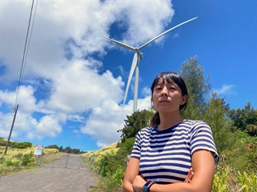
In this digital world of everything is on all the time, electricity is the currency that drives the economy and modern life. But tell that to Sunny Unga, a self-proclaimed community activist fighting the good fight, or so she believes. Previously reported in Civil Beat, Sunny represents some of the North Shore community and residents located near a wind farm who believe wind power and the turbines that delivery clean power electricity to her home and community are, well; …not in my backyard.

Wind ProtesterHawaii’s activists pushing back against clean energy developments, in this case, have an audience that is listening, the Honolulu City Council. Presently the Council has three proposals being considered designed to protect communities from the placement of large wind energy projects too close to their backyards. The three bills range in project set back requirements from 2 to 5 miles from subdivisions, schools, and other populated developments. A reasonable solution, at least by some standards.
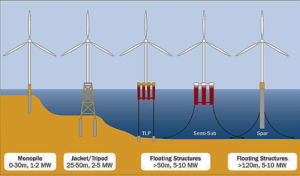
But for Oahu, any meaningful transition off its dirty energy addiction will take more than just project citing adjustments to advance its clean energy agenda, and wind power is a primary source solution for the state. While Maui and Hawaii Island have successfully adopted and welcomed wind power as part of the clean energy mix. limited land options coupled to population density and high energy demands, and limited clean power replacements translate into wind as one of two truly clean and zero polluting energy solutions for Oahu and the state of Hawaii which are blessed by being rich in clean, sustainable, and reliable natural energy options; wind and solar.

Hawaii’s Offshore Wind Resources Are Abundant 

Off Shore Wind Turbine 1Offshore wind has the potential to deliver large amounts of clean, renewable energy to fulfill the electrical needs of cities along U.S. coastlines and Hawaii’s mid-Pacific location. Under conditions that foster offshore wind utilization, the National Renewable Energy Laboratory estimates that the technical resource potential for U.S. offshore wind is more than 4,200 gigawatts of capacity, or 13,500 terawatt-hours per year of generation.
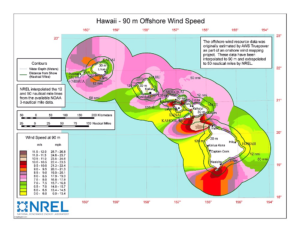
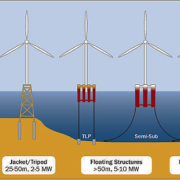
Wind turbines can be anchored to the sea floor in ocean depths exceeding 2,000 feet or as floating platforms. Decades of citing oil platforms in a variety near and far off-shore ocean conditions has created a wealth of knowledge and technology applications for citing wind turbines.

There are variety of Wind energy options, and in the case Oahu, sea-based off-shore wind turbine installations would prove to be not only cost effective to ratepayers, but a reliable clean energy source with minimum environmental and social side effects; a world class zero emissions energy source. Offshore wind also has the potential to contribute significantly to the state’s RPS.  As series of island-based communities, Hawai‘i has a strong wind resource and a population (and corresponding electricity demand) concentrated along the coastline – a win-win energy opportunity for the state with off-shore wind.

Wind Power Map Hawaii

  • Offshore wind turbines are also proving to be more efficient than land-based alternatives. Higher ocean wind speeds and consistency in direction means offshore installations require fewer turbines to produce the same amount of energy as onshore wind farms. The wind at sea is stronger, more consistent and less turbulent than on land. This means more power can be generated more reliably.
  • Land-based battery storage will ensure these wind-powered energy sources are generating power for around the clock power grid and consumer demands.

The floating wind industry and its technology base continue to evolve rapidly. The progress in wind tech is driving greater costs reductions and operating efficiencies. Technology improvements continue to advance reductions in overall operating costs, already a cost effective alternative to fossil fueled power plants.

As stakeholders on Hawai‘i have strong cultural, social, and environmental ties to the land and surrounding ocean, collaborations between project developers and local community members will be required to identify the best technology choices for offshore wind. The results of these collabtive efforts could be regularly refined and updated to reflect the growth of the industry and ongoing collaborations with stakeholders on Hawai‘i.

Off-shore Wind Turbine installations – Cause and Effect

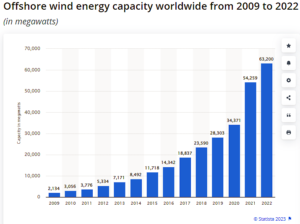
Off Shore Wind GrowthDeepwater wind turbine installations, more specifically, floating offshore wind energy facilities, also known as OWFs, and which are presently deployed are yielding more and more data that support previously assumptions of minimal effects on the marine environment from wind turbines. Off-shore wind turbine installations can also be installed beyond line-of-sight from the shoreline, aka over-the-Horizon installations which have no social impacts in terms of citing and view and minimal marine impact.

Using the available scientific literature from recent studies conducted, systematic reviews have estimated the potential environmental effects of deepwater, floating (wind platforms) OWFs during operation, as well as potential mitigation measures designed to mitigate operating effects on marine life with an emphasis on six areas of potential environmental effects from off-shore turbine operations.  A recent synthesis of 89 articles selected for the review suggests that many projected environmental concerns did not exist or could be mitigated to pose a low risk to the marine environment if developers adopt appropriate mitigation strategies and best-practice protocols.

Conclusion

Hawaii’s energy stakeholders, which includes everyone in the state, should embrace the possibilities that Wind Energy offers. Not only as a replacement for much more harmful and expensive combustion energy sources which continue to represent the major of energy generation in the state today, but also as a companion to Solar Energy, which together in combination with today’s energy storage technology represent a truly clean energy economy that is a part of the environment, and not at war with it.

_____________________________________________________________

Article RESEARCH:

Related NEWS: 05.26.23:

Bottom-Dwelling Marine Animals Thriving on Offshore Wind Farm Foundations


Solar Wind Bess

Hawaiian Electric; forward into the past

Solar Roof HonoluluFor the past 10 years, the utility’s transition decisions to renewable energy have been notable, not so much in terms of actions, but in overall inaction. The system has historically worked well, for the most part, but time, technology, and necessity have turned obsolete utility operating assumptions on their head.
Increased demand for electrical energy is now being accelerated by a growing demand from the electrification of ground transportation. Hawaii in the crosshairs between grand expectations of a clean and self-sustaining clean energy economy, and how best to address the opportunities for change.  Front and center is how the state’s largest utility will best address the dual challenges of climate change adaption, and the ever-increasing cost of electricity on household and business budgets. And ratepayers remain in the crosshairs of the state’s largest energy monopoly, Hawaiian Electric, and neverending rate hikes.

Life as a Energy Monopoly

The business, regulatory, and financial structure of public electricity services are by design unique from any other form of commerce.  The underlying elements of risk and reward in private sector business ventures are mostly absent for electric utilities like Hawaiian Electric, replaced by income and profit guarantees. Risk, innovation, and cost performance are framed inside a business operation serving as an energy monopoly with publicly guaranteed (by ratepayers) returns on investment in exchange utility guarantees on minimum levels of public service provisioning; electricity delivered on customer demand.  This system has worked well for the most part for the last 100 years, but time, technology, and necessity have turned these obsolete utility operating assumptions on their head.

A monopoly is generally defined as limiting available substitutes for its product, engaging in price fixing, and creating barriers of entry for competitors, and is generally illegal within the United States, except in the exceptional case of utilities offering essential public services. Public utilities are regulated by, yes, a state Public Utility Commission, but generally accountable to both state and federal (FERC) oversight, which is not the case for Hawaiian Electric solely bound by state regulation, and SEC regulation as a publicly-traded company.

The system of utility-driven checks and balances has worked well for the most part in the past. but in the case of Hawaii’s energy present and future, have increasingly been called into question. Change is the culprit, and it is evitable, with a looming global climate crisis now in progress, clean energy technology advances that have blurred the line between power consumers and power producers, and pardon the pun, empower consumers to take control of their power needs.

Nobody ever said change is easy, and in Hawaii’s case, isolation from mainland energy suppliers, has placed a decades-old 100% statewide renewable energy (electricity) mandate by 2045 on an uncertain course and outcome.

Hawaiian Electric, for reasons not generally known, now finds itself struggling to balance its past, present, and future operating priorities. And how best to balance those operating priorities firmly rooted in the past with a statewide clean energy mandate, and at the same time supporting traditional profit models, investor expectations, and internal operating priorities focused on extending the life of its legacy investments in old combustion polluting power plants. All this is in the background, while the company faces a new generation of clean energy options and greater customer expectations.

He Oahu Power PlantThe utility’s focus on preserving its past stranglehold on electricity production and delivery is already endangered as an increasing number of households and businesses who are taking control of their energy destiny by adopting rooftop solar and battery storage.   This consumer trend is driven by several factors beyond cost and energy savings, increasing energy security is a major factor in this transition, reducing grid power essentially to a backup energy source. Efficiency is another major factor favoring this cost-saving and energy-resiliency move by consumers.
The most efficient energy management outcome is the ability to produce, store, and deliver energy on-demand at the point of consumption, e.g., rooftop solar + storage.

Today’s utility model is not only obsolete; it is also unnecessarily outdated, costly, and energy inefficient.  The average loss of power between the power plant and consumers ranges between 5-15%, A challenging service topography, and fragmentation within Hawaiian Electric’s service territory, from transmission to plug, place power efficiency losses on the high end of the scale.

A transition to a clean and sustainable energy economy requires practical and equitable clean energy substitutes for Hawaii’s traditional and unsustainable dependence on dirty and imported fuels required to fuel the state’s outdated and inefficient grid-powered energy delivery system. — goals for the state and compliance with aggressive goals to reduce greenhouse gas emissions and increase the proportion of their energy portfolio produced from renewable energy sources, loosely defined as dirty energy options other than fossil fuels, and clean energy options, e.g.; such as solar and wind and storage.

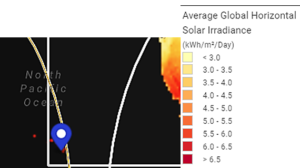
Hawaii Solar Radiation In The ZoneIn Hawaiian Electric’s own words… “In 2022, solar power provided about 17% of Hawaii’s total electricity, primarily from small-scale, customer-sited solar power generation that is the 10th-highest among the states.”
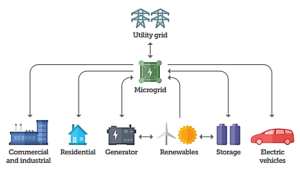
“In 2022, about 29% of the state’s total generation came from renewables.” That so-called renewable energy balance of 12%, was represented by burning toxic trash for power, cutting down trees, burning them to generate electricity, and continuing to engage and expand a geothermal plant, which has consistently failed to meet minimum power generation commitments since the 2018 Kilauea eruption, and advancing a highly questionable biofuel combustion plant agenda.

Nearly all the energy available on Earth is derived from solar radiation, especially in Hawaii. That includes the energy that drives natural processes from wind systems and the hydrological cycle to leaf photosynthesis.

Solar energy and its cousin wind energy have become the most important and cost-effective clean and zero-emissions sources for generating electricity and hot water systems.  Today’s battery and hydro-storage systems turn these variable clean energy sources into around-the-clock, reliable, and resilient. energy sources ready to serve all of Hawaii electricity needs.

The state’s largest utility is at a cross-roads, the opportunity for transformation has never been greater.  Holding onto an energy past neither serves its customers nor shareholders. It is a path to failure, one increasingly, which will not be subsidized by ratepayers or lost opportunities.

Solar Wind Bess

Microgrids, the Legos of a Clean Energy Economy

Recently the subject came up, once again, as to what is wrong with Hawaii’s stated quest of 100% renewable energy by 2045. The why side of that same question is for another editorial, although BeyondKona readers will find plenty of articles, references, and analyses as to the why and contributing reasons…

A fundamental building block to Hawaii’s potential clean energy future, microgrids.

Beyondkona explores the game-changing energy role microgrids offer, and why without them, Hawaii’s largest utility may continue to degrade in reliability, raise ratepayer costs without end, and possible fail to transform itself to serve a clean energy future for the people and economy of Hawaii.

Microgrids

How would microgrids, as part of Hawaii energy transformation, effectively respond to an increasingly unstable and uncertain world of changing energy supply markets, unending rising energy costs?  Fundamental questions on the state’s path to achieve a sustainable, self-efficient, consumer-reliable clean energy future.

A Microgrid, by definition is a stand-alone or connected system serving a wide variety of localized energy demands. In both cases, these energy systems offer fundamental energy efficiencies and flexibility not found in today’s 20th century central utility power provisioning and transmission model, and are increasingly associated with zero emissions solar and wind energy sources coupled to onsite energy storage; primarily batteries.

First, Microgrids make clean and renewable energy, storage, and efficiency very attractive by integrating all them into a unified and resilient energy system.

The heart of microgrid benefits are two fundamental and enabling changes they offer to today’s utility grid.

  1. Microgrids are highly resilient and reliable in a changing world in which climate weather assumptions of the past no longer apply.
  2. Microgrids are also a “distributed” energy system, in which power is mostly produced and consumed at or near the point of energy production, i.e., rooftop solar, eliminating power loses and long distance energy transmission uncertainties.


Microgrid

Microgrids generally operate as fully automated, self-contained power systems (generation, storage, self-managed). From a house with rooftop solar and energy battery management and storage system. a community energy system, and/or scaled up to a section of a utility’s overall transmission grid system (aka grid island).

Further, increased deployment of clean and efficient “distributed” power technologies not only reduce or eliminate greenhouse gases and other emissions associated with today’s power grid system, but also offer energy security by mitigating power disruptions and disturbances not otherwise fully addressed with today’s 20th-century grid architecture.

Think of a microgrid as the name implies, as a smaller (localized) power system that generates power, completely manages power generation and distribution, does it simply and effectively through onsite power storage. Power flow regulation for on-demand power management is fundamental throughout the connected points to/from the microgrid.

Distributed Energy: solar + batteries (BESS), a powerful combination

The definition and application of microgrids continues to expand, based on both application and scale.  The term “microgrid” also includes stand-alone rooftop solar and battery systems as key contributors to stability of existing utility-integrated systems.

At the same time, just within the past 5 years, significant technology advances in microgrid technology have broaden the very definition of what is a microgrid. Software developments and applications continue to lower energy and operating costs, both measured in terms of a system’s capex and the lifecycle costs of microgrid operations.

These same improving operating efficiency elements are making it increasingly difficult to defend 20th-century, business as usual, grid power assumptions relient on large scale and mostly reliable firm-power utility assumptions. This is especially true with rooftop and utility scale solar systems connected to onsite battery BMS technology.

Today’s advanced battery-management software (BMS) technology, is now incorporated within battery storage as a complete system. In effect, functioning as the energy brain of a micro-scale power plant specific to individual buildings. These stand-alone systems control the flow of power, both supply and demand, from building rooftops and batteries to the grid and back again). This same microgrid application and process includes real-time power balancing (between the point of local power generation <rooftop>, power flow balancing between consumption and production, while simultaneously managing power reserves stored within the local microgrid battery system; e.g., voltage, frequency, and waveform stability. But BMS benefits do not stop there, they further incorporate real-time diagnostics and contribute to grid stability.

Solar Plus Battery Plus GridIn the case of grid-connected battery systems, they manage real-time power demands, while simultaneously balancing power supply with demand between the microgrid and the utility grid and in the combination of managing one-way and two-way directional power flows. In effect these points of power production and consumption (as in individual buildings) can operate entirely independent or as part of the utility grid

One popular system example is the Tesla Powerwall battery power management system, which can be easily accommodate same day activation for an individual home or commercial building complex rooftop solar system. In effect, it is a scaled-down version of what utilities rely on to manage centralized grid power production, power flow, and customer power connections (SCADA systems) — and at a fraction of the cost.

In short, microgrids operate as stand-alone systems, powering a home or commercial buildings, or scaled up to powering entire neighborhoods, college campuses, military bases, and even sectors of of a centralized grid system or connected as self-sufficient microgrid sectors comprising a larger grid system.

Microgrids are scalable, reliant, and proven clean energy transformation options whose time has come.

Microgrids are now transforming today’s inefficient and centralized power generation utilities, traditionally dependent on long hauling electricity (with power losses) through vulnerable grid infrastructures and over long distances, all of which are proving to be unreliable and costly to ratepayers, the environment, and Hawaii’s economy.

Hawaii, is more than ready to transform itself into a robust, distributed, and many times more efficient and cost-effective clean energy future.

Microgrids will enable this transformation faster, at lower cost, while delivering an intelligent, zero emissions (non-polluting and sustainable), and energy self-sufficient outcome; and one that is no longer dependent on burning trees, trash or fossil fuels for power.