Hu Honua Update – October 2019…
Cutting Down Hawaii Island’s Forests to Burn to Make Electricity is one of Hawaii’s dumbest and costly power production ideas yet.
See what we mean: https://youtu.be/-Q0xUXo2zEY
The origins of Hu Honua date back to 2008, and like a malignant cancer, the Hu Honua power project proposal has been difficult to eradicate.
A total absence of County and State due diligence helped enable HuHonua and its investor advocates bypass elemental questions as to project’s justification, overall costs to ratepayers and environmental impacts of this ill-conceived power production project. Now it’s up to the PUC to decide (again), but this around it is the question of Greenhouse Gas emissions that will be produced or off-set by the operation the Hu Honua power plant.
During the past 5 years, public (and ratepayer) opposition to the project has grown, and with increased scrutiny the economics and environmental life cycle impacts of the project (although only partially considered by the state and the current PUC process) increasingly looks bad for Hu Honua. Faced with more cost-effective and environmentally benign power substitutes now available to HELCO, Hu Honua makes little sense as it may have its vested interests when first proposed.
On October 21, 2019 HELCO submitted to the state PUC their reasoning and their defense to questions raised by a Hawaii-based citizen group (Life of the Land) lawsuit. They questioned the public merits of the project and its environmental implications. The utility’s response to the question of added greenhouse gas (GHG) emissions resulting from Hu Honua’s operation was, and is, the primary issue now at hand. HELCO’s reply can be summed up in their submission as...”It is Hawaiʻi Electric Light’s understanding that assumptions and detailed calculations for the lifecycle emissions from Hu Honua Project will be presented in the Hu Honua GHG Analysis report to be filed separately by Hu Honua.”
The Hu Honua reply side to the PUC followed HELCO’s submission and mostly copies the utility’s statements with one exception, HuHonua failed to include the biogenic carbon dioxide emissions in determining compliance with the CO2e emissions cap. By failing to fully answer this key question as the proposed plant’s GHG pollution emissions impact, Hu Honua should be denied their permit to proceed, plain and simple, but it remains to be seen what the PUC decision will yield.
HELCO invested considerable ratepayer dollars in hiring a sophisticated energy consulting firm, Ramboll, known for their work in lending life to fossil fuel plants and advancing waste-to-energy (burning trash to create electricity). There is nothing wrong with Ramboll, expect that their consulting expertise is heavily weighted to projects and technologies that do little evaluate impacts or measure the net production of global warming emissions from power plants. The requirement for weighing “lifecycle greenhouse gas emissions” in energy decisions, although new to Hawaii and its PUC, is an increasingly common metric in other power markets.
With every consultant or attorney there is the art of language.
If language is plain and clear it does not always serve its intended purpose. Such is the case in the field of energy and from an entire dirty energy industry sector that is now scrambling to respond to public and regulatory pressures to address “their” role in an emerging global climate crisis. Thus the name invention of bio-fuels and bio-energy as clean or renewable energy sources, which in some cases they and others they are not. Hu Honua falls into the latter category.
Convincing Hawaii’s state legislators that their creation of a well meaning 100% 2045 renewable energy mandate for the state that includes both dirty and clean energy substitutes as qualified fossil fuel energy replacements is another matter entirely. Biological based energy sources or Bio-energy, as is the case of the HELCO-Hu Honua power agreement, is a controversial energy fuel replacement strategy and one that is at the heart of this power application before the PUC.
Increasingly, replacement substitutes for fossil-fueled electricity sources must be weighed not only on their direct cost ratepayers, but their total costs to society and taxpayers.
Greenhouse Gas Emissions – include, but not limited, to CO2 (carbon dioxide), methane, etc. Primary GHG sources: Fossil Fuel Power Plants, Transportation, Oil-Gas extraction.
Biogenic (carbon dioxide) Emissions — include emissions from a stationary source directly resulting from the combustion or decomposition of biologically-based materials other than fossil fuels, in the case of Hu Honua: Trees. When sustainably sourced, combustion from such fuels (it is argued) do not result in significant or lasting increases in atmospheric CO2 concentrations.
The basis for this theory goes like this…Bio materials burned for power are then replaced with new plants and trees which serve carbon sink replacements for those bio materials harvested for power production — this, however, is not the case with HuHonua and its business case that is built on burning free Hawaii County trees and until the supply is exhausted, at which time added fuel (trees) will be imported to burn when and as needed cost and GHG transportation are unknown, but accumulative.
The 30 year long HELCO power-buy agreement from Hu Honua does not consider the costs and implications of an exhaustible Hawaii Island based bio fuel source for which the proposed power plant has been designed.
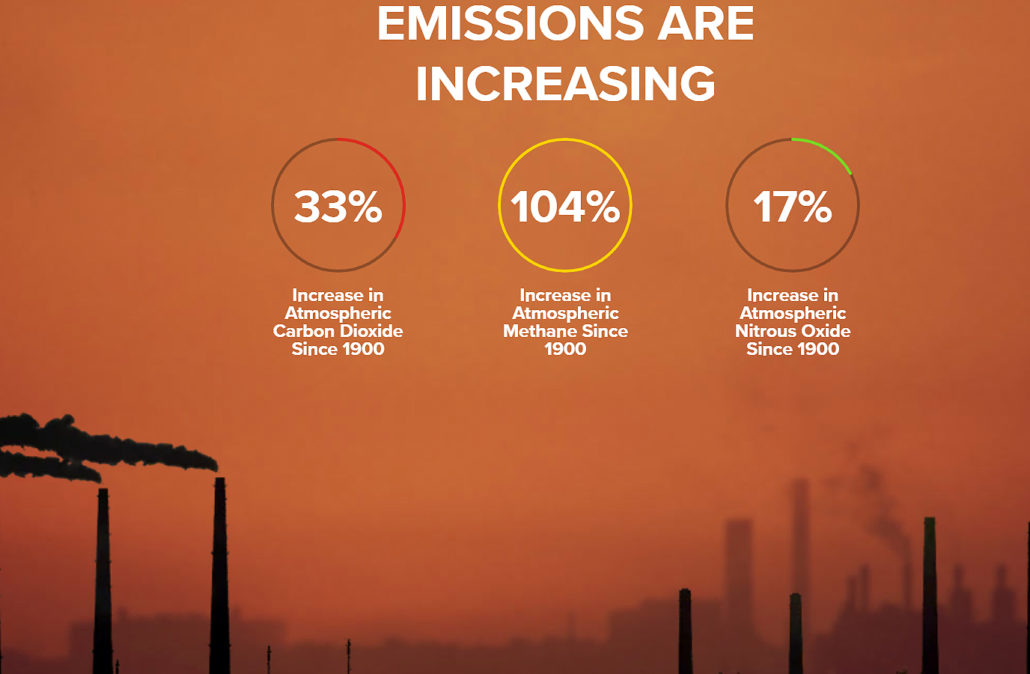
Not all sources of biogenic carbon are rapidly renewable, if they’re renewable at all. Clear examples of this include old growth forests, peat bogs, or other sensitive and enduring ecosystems. In fact, use of biogenic carbon as a fuel source could even result in damage to that ecosystem while increasing atmospheric CO2
In the case of the HELCO-Hu Honua power agreement, both parties must now weigh and project the GHG (lifecycle) impacts of the proposed bio-energy planet on Hawaii and the planet.
HELCO just presented to the PUC (10-21-19) its own data as to potential replacement of GHG emissions output by substituting HuHonua energy for some of its predominantly fossil fuel (diesel-fired) power plants, and in two scenarios: with and without, the reactivation of the island’s Puna geothermal power plant.
The HELCO GHG emission assumptions include Hu Honua serving as an operating power replacement for some the utility’s fossil fuel-based power generation sources. The utility asserts that the HuHonua will reduce GHG emissions from the grid’s status quo assumptions, but it lacks the inclusion of some fundamental factors Hu Honua represents to ratepayers, Hawaii’s environment (air,water, and land), and utility’s other clean power replacement opportunities for Hawaii Island.
HECO/HELCO have announced plans for utility scale solar, wind, and storage projects, but the substance of these projects remains uncertain, and the utility continues to talk clean energy, but fails to walk their talk. Rather, HECO has consistently worked (effectively and statewide) to retard the advancement of rooftop solar and consumer-based power storage options, and instead has spent ratepayer dollars to protect its power monopoly status
None of these zero emission power options carry with them the environmental and socioeconomic impacts of the HuHonua power plant if allowed to go online.
It’s now up to the PUC to decide on docket 2017-0122 and the future of energy on Hawaii Island.
Public Comments on HuHonua Requested – Response Deadline: Nov. 26th, 2019
Posted on November 1, 2019, by Henry Curtis
The Hawai`i Department of Health has opened another climate change public hearing regulatory process that many consider meaningless.
The Hawai`i State Legislature asserted that climate change is an existential threat to mankind, the Department of Health should regulate greenhouse gas emissions, and that the regulations can be developer-friendly and extremely weak to non-existent.
DOH issue permits dealing with existential threats to planetary ecosystems. The DOH permit to pollute remains in effect during public comment periods, contested case proceedings, and legal challenges. Expired permits remain valid until renewed.
In the case of Hu Honua, the public is requested by DOH to submit comments until November 26 and may ask for a public hearing or a contested case proceeding.
Mail: Department of Health, Clean Air Branch, 2827 Waimano Home Road, #130, Pearl City, HI 96782
Email: cab@doh.hawaii.gov
Hu Honua wants to chop down and burn forests to generate electricity.
Life of the Land has requested a contested case proceeding.
The public is invited to participate in commenting on the proposed Hu Honua “updated greenhouse gas (GHG) emission reduction plan dated August 2019.”
The Hu Honua Covered Source Permit (air pollution permit) issued “on February 18, 2016, and amended on December 11, 2018, shall not be affected and shall remain valid.”
The Hu Honua facility will have a greenhouse gas emission limit. “Hu Honua Bioenergy Facility shall not emit or cause to be emitted carbon dioxide equivalent (CO2e) emissions in excess of 3,979 metric-tons (4,386 short tons) per calendar year.”
The cap does not include biogenic emissions — which is the only type of emissions that Hu Honua will emit.
Hawaii Administrative Rules (HAR) specify that “Except for fee assessments and determining applicability to this section, biogenic CO2 emissions will not be included when determining compliance with the facility-wide emissions cap until further guidance can be provided by EPA, or the director, through rulemaking.”
HAR defines Biogenic CO2 emissions.
“CO2 emissions from a stationary source directly resulting from the combustion or decomposition of biologically-based materials other than fossil fuels and mineral sources of carbon.
“Examples of biogenic CO2 emissions include, but are not limited to: CO2 generated from the biological decomposition of waste in landfills, wastewater treatment or manure management processes; CO2 from the combustion of biogas collected from biological decomposition of waste in landfills, wastewater treatment or manure management processes; CO2 from fermentation during ethanol production or other industrial fermentation processes; CO2 from combustion of the biological fraction of municipal solid waste or biosolids; CO2 from combustion of the biological fraction of tire-derived fuel; and CO2 derived from combustion of biological material, including all types of wood and wood waste, forest residue, and agricultural material.”
http://www.ililani.media/2019/11/hawaii-meaningless-laws-regulation-to.html
For further details:
- hu-honua-2019-burn-trees-for-power-update/
- LOL Submission to Hawaii Dept of Health, re HuHonua pollution permit: 10.31.2019 Life of the Land HuHonua App Response