

The Cost of an Unchecked Presidency
Escalating costs, shrinking weapons inventories, and misuse of aging Navy, Army, and Air Force assets are the new norm of America’s defense establishment. Driven into unnecessary conflicts by President Trump Administration’s shoot-from-the-hip foreign military misadventures — the costs of such risky policies and unfounded foreign engagements continue to rise. The questions are who pays, how much, when, and most importantly, why??
Beyond direct military operations, the Trump administration’s broader fiscal agenda represents the largest defense build-up in modern history:
- FY 2026 Defense Budget: Reached $1.01 trillion (a 13.4% spike over fiscal year 2025).
- FY 2027 Proposed Budget: The administration has proposed a defense package totaling $1.5 trillion, utilizing legislative mechanisms like Reconciliation 3.0 to request an immediate $350 billion boost from Congress.
The Financial Cost to U.S. Taxpayers
The financial burden on American taxpayers to sustain the Trump military agenda, to date, requires the rebuilding of an increasingly depleted global US Military arsenal.Escalating costs, shrinking weapons inventories, and misuse of aging Navy, Army, and Air Force assets driven into unnecessary conflicts led by the Trump Administration’s shoot-from-the-hip foreign military misadventures.
Altogether, wars without reason and funded without justification and congressional approved budgets work — until they don’t and the national bill comes due. It is a public cost measured in economic, social, and security elements, comes with it unaccounted climate-environmental costs – altogether these costs are at price too high to justify any and everything in the name of American security.
Patriot Missile Stockpile Strain & the Consumption Gap
The Patriot Missile system is increasingly demonstrated it to be a Key Weapon System within the US arsenal, and is now being squandered at an increasingly unjustifiable pace, and what experts describe as costly for a key weapons system essential in the support of America’s global military adventures. But, its limited availability and cost is another shining example of escalating public costs required to advance the most effective weapon in the US military inventory and in the form of the Patriot missile system.
Technologically advanced, more so than any other similar missile system in field today by the US or its allies or its enemies, the Patriot remains slow-to-build and slow-to-scale, and especially within today’s environment of wasteful use vs. demand. And the core issue today facing the DOD is a severe mismatch between wartime consumption and industrial manufacturing capacity for the Patriot.
The Consumption Rate: During a single five-week period of heavy escalation in the Middle East, U.S. and regional coalition forces fired over 1,700 Patriot interceptors to protect bases and assets.
- The Production Deficit: In stark contrast to that rapid expenditure, the U.S. industrial base (led by Lockheed Martin and RTX/Raytheon) only manufactured roughly 600 to 620 Patriot missiles per year.
- The Monthly Inflow: The Pentagon currently receives a meager 20 new Patriot missiles per month.
- Recovery Timeline: The Center for Strategic and International Studies (CSIS) estimates that it will take until mid-2029 for U.S. Patriot stockpiles to return to their pre-conflict levels.
Financial Cost to U.S. Taxpayers
The financial burden on American taxpayers to sustain this strategy and rebuild the depleted arsenal is historic.
| Item / Initiative | Taxpayer Cost Impact |
| Single PAC-3 MSE Interceptor | $4 million to $5 million per missile fired. |
| Total Expended on Patriots (Iran War) | ~$5 billion in ammunition burned through so far. |
| Emergency Acceleration Contract | $4.76 billion awarded in April 2026 to rush production lines. |
| White House Emergency Funding Request | $87.6 billion requested from Congress (with $21 billion explicitly for munitions). |
| Proposed Total Defense Budget | $1.5 trillion submitted by the Trump administration to pay for global military escalations and stockpiling. |
The Patriot Push
However, defense experts caution that money cannot buy immediate capacity.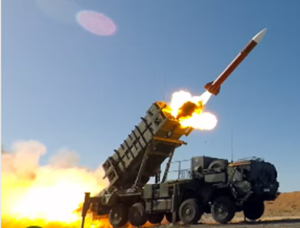
A single Patriot missile takes over two years to build from factory to frontline, meaning the expanded production targets will not be fully realized until the end of 2030.
Further, these massive contracts remain “undefinitized” and cannot be fully executed until a gridlocked Congress formally approves the administration’s massive supplemental spending requests. And money is only part off the puzzle of how to scale a hand-build weapon system to meet reckless demand, in which a multi-million dollar mission encounters flying drone which is easy to build and costs less than $2,000 to build in someboy’s garage against teh world’s most sophisticated and technologically advanced missile measured in the millions of dollars to build and deploy just one patriot.
The Industrial Ramp-Up Plan
To fix this weapon deficit, the Trump administration and the Pentagon have established a seven-year framework agreement with Lockheed Martin (the Patriot’s primary contractor) to triple production capacity, aiming to increase output from 600 missiles annually to 2,000 per year. However, defense experts caution that money cannot buy immediate capacity.
A single Patriot missile takes over two years to build from factory to frontline, meaning the expanded production targets will not be fully realized until the end of 2030.


Leave a Reply
Join the Community discussion now - your email address will not be published, remains secure and confidential. Mahalo.